
I’m nearing the end of Ed Park’s fantastic (as in very good but also as in not realist) novel Same Bed Different Dreams, flying too fast through its meticulously constructed pages, trying to remember who’s who and what’s real and to figure out how things are connected in its highly researched, deeply imagined account of Korean and American history. I can’t recommend it highly enough.
At one point, the novel tells the story of a fake thing that really happened in Buffalo, NY in 1952. Responding to a request by the military, the editor of the Buffalo Evening News publishes an edition of the paper reporting that the city’s downtown had been hit by a Soviet atomic bomb. The idea, the lieutenant general who makes the request tells the editor, is not to do another War of the Worlds but to make the public remember what their military shields them from, as it fights for them in Korea. In the editor’s words, “They will imagine the ruins of the city.” The paper even includes an explanation of how they were able to publish that details the destruction, down to the loss of their building: “Buffalo Evening News employes [sic] reported for work this morning as usual–a few hours later all were killed or wounded.”

Reading this part of the novel this morning, I had the ridiculous thought that my local paper would do this. Tomorrow. I would wake up, walk down my front walk, pick up the paper, take it out of the blue plastic bag, and see the headlines: TRUMP ADMINISTRATION ORCHESTRATES COUP, INSTITUTES MARTIAL LAW. PROVISIONAL GOVERNMENT BEGINS MASS DEPORTATIONS, OPENS CAMPS FOR INTERNAL ENEMIES.
I imagined this ridiculous prank because I’ve been not-watching the Republican National Convention and because I’ve been living in the U.S. for the last eight years and forty-nine before that. I imagined it because I’ve been hearing on social media what they’ve been saying in Milwaukee and joked this morning that it might be time to teach Sinclair Lewis’ novel It Can’t Happen Here again.
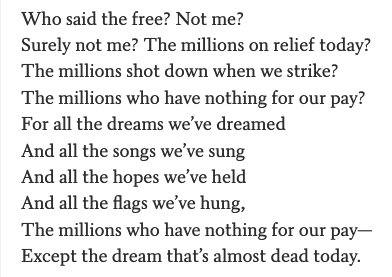
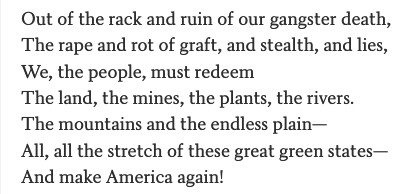
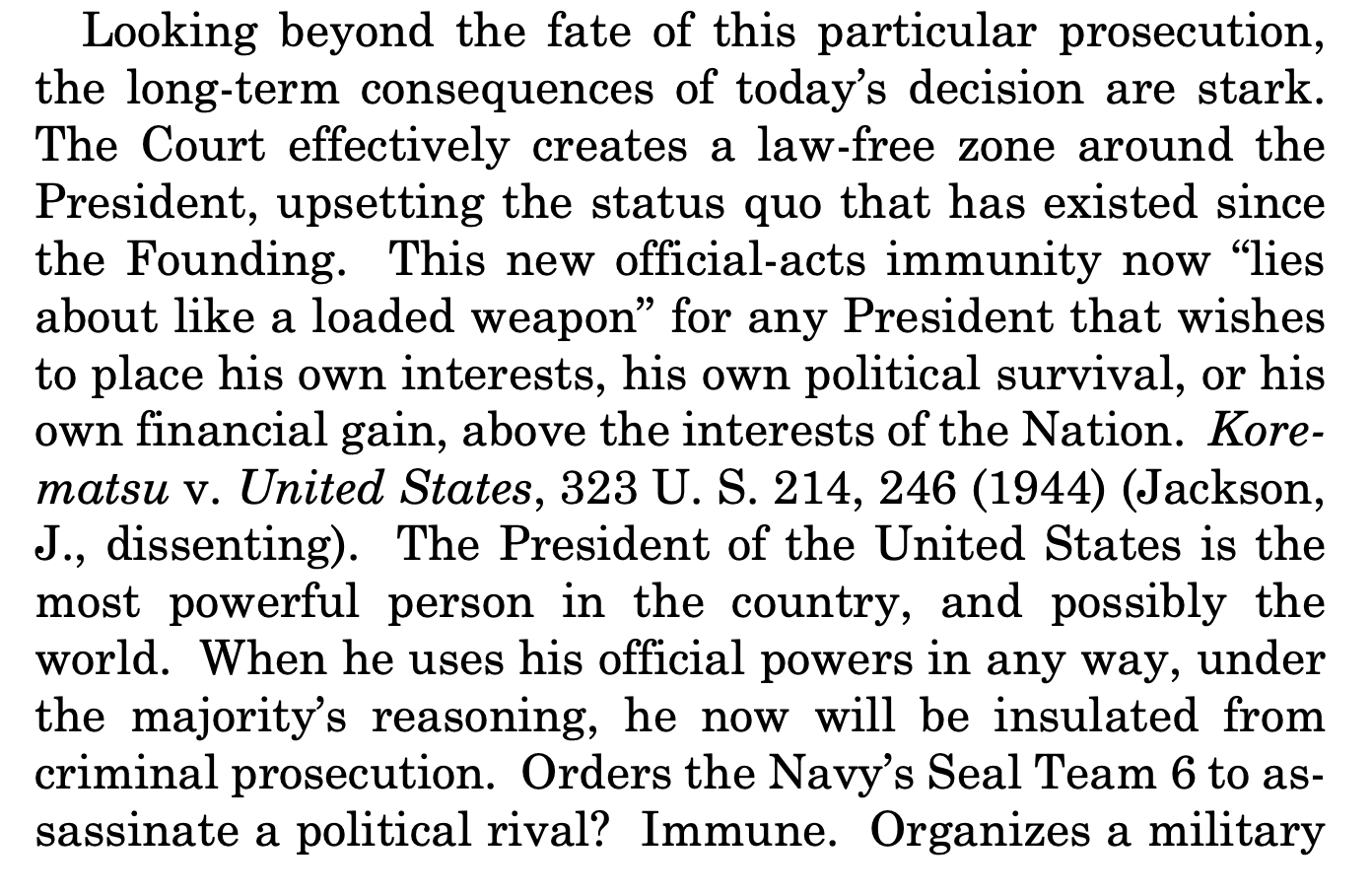
I want somebody to remind my fellow citizens of what our democracy–as compromised and undemocratic and unequal as it’s been for many of us and as harmful as our behavior has often been abroad–exists to shield us from, to borrow the editor’s words, what the institutions and people of good faith who try to hold them up work to keep at bay: the authoritarians and kleptocrats, the true believers, the people who hold up Trump as their savior, protected from flying teleprompter glass by god, protecting them from taxation and regulation. Instead of describing how civilized the Republican convention has been or how riven by disagreement the Democrats are (or instead of reporting on the convention’s lies or the incumbent’s actual health and electoral chances, but who are we kidding), it might be good to have the newspapers scare the shit out of us by showing us an imagined future where what could happen does.

Want to say it couldn’t happen? Want to Corey Robin this and tell us Trump’s not a fascist because he’s incompetent or because you want to look smart? Want to tell me that you know best about the coming election because departments of political science exist and use numbers to tell us things that sometimes numbers can’t tell us? Go for it, but don’t come crying to me when what can’t happen here happens here because you thought you knew better.
I don’t know how Same Bed Different Dreams ends. But I feel like I’m in good hands, like Ed Park understands the power of history and storytelling and the responsibility he’s taken on in constructing his own imaginative history. I don’t know how the story of this election ends either, but I don’t feel like I’m in good hands with American journalism anymore, largely. I don’t even feel that way anymore about many of my peers–friends, colleagues, professors across the country, fellow voters–and that’s an awful feeling (one many of them feel about me, I’m sure). It’s time to stop fucking around. It’s time to imagine the ruins of the city and use those imagined ruins not to be paralyzed by anxiety or depression or moved to rash decisions or infighting but to keep the ruins from becoming reality, or at least any realer than the foot soldiers in state legislatures, school boards, and high courts are already working to make them. In the words of Fountains of Wayne, it’s time to get our shit together.




 Samuel Cohen