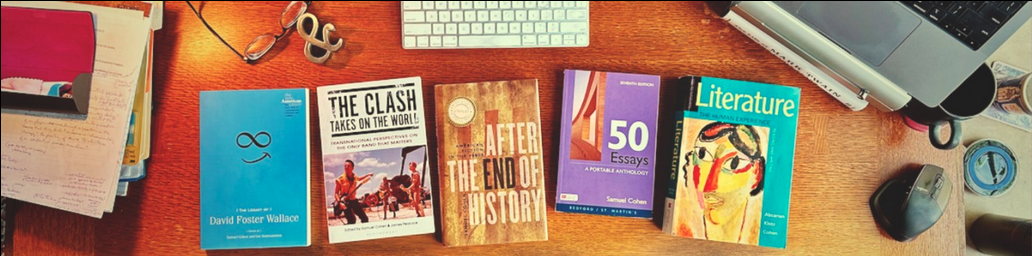

Today I taught my first class of the new school year. It was the first meeting of my course on book banning in America, and, as I learned when I asked them to go around the room and introduce themselves by saying where they were from and what their major was, what their favorite book is, students are taking the class for various reasons: because they liked the topic, because they needed to fulfill a distribution requirement, because they were in my class last semester and didn’t hate me I guess.
I had a great time.
Of course this is not the most important thing about a class meeting. It might be the least important thing, though I think many of us teach better when we’re enjoying ourselves. But it felt good to be in a room with thirty students on the first day of a semester, introducing what we’ll be working on for the next fifteen weeks. We came together, for fifty minutes, to earn distribution credits and for other reasons, starting to get to know each other a little and to think together about the history of attempts by Americans to keep other Americans from reading books they decided they shouldn’t get to read. It felt like possibility, as it has the first day of every semester I’ve taught for thirty years (!). And the way the summer’s gone, nationally, possibility feels especially good to me right now.
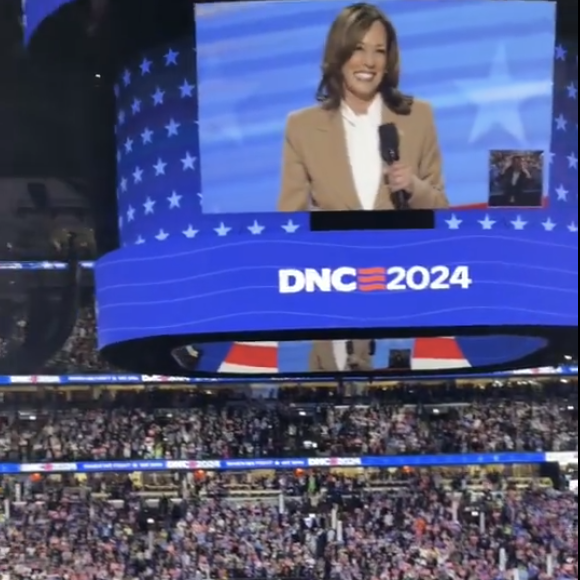
Tonight I’m sitting in front of the TV watching the Democratic National Convention. It’s easy to be cynical about conventions–there’s no more theatrical political theater–but so far this one is pretty inspiring. UAW President Shawn Fain followed Warriors coach Steve Kerr. A smart producer cut from Alexandria Ocasio Cortez delivering a fiery speech to a shot of Jesse Jackson listening and looking impressed. I’m feeling demographically targeted. I’m also feeling something like what I felt this morning. A convention is a coming together, etymologically. And it’s about possibility, about what the people coming together can make happen. And this particular convention comes at a time when that possibility feels pretty precious.

Wednesday, when class meets again, we’ll be talking about the long history of book banning in the world and the shorter but very busy history of book banning in the US. One event I’ll bring to the discussion is the banning of Thomas Morton’s 1637 New English Canaan. Morton came to Massachusetts in 1624 with the Puritans to Plymouth Colony, established an offshoot community that traded with Native Americans, and got exiled for it. New English Canaan is a celebration of the culture of the natives and a criticism of their treatment at the hands of the Puritans. So they banned it, making it likely the first book explicitly banned in what is now the United States. Importantly for our purposes in the course, the banning was motivated by fear—fear of loss of business from Plymouth to the natives, and fear of the natives themselves, with whom Governor William Bradford saw Morton’s people “dancing and frisking together,” something not even allowed among themselves. By the time we get to contemporary efforts to keep books away from children, we’ll draw the parallels to the motivating fear of difference–of Black people, queer people, people who don’t conform, who resist–behind those efforts.
As with the topic of my course, there’s a long history behind what’s happening this week in Chicago. It’s not always pretty, that history, not the part that began before the Puritans and not the part that began when Barack Obama made a joke that Donald Trump didn’t like. When things have improved over the course of that history, it’s been because people came together to work toward the possibility of treating others, however defined, better.
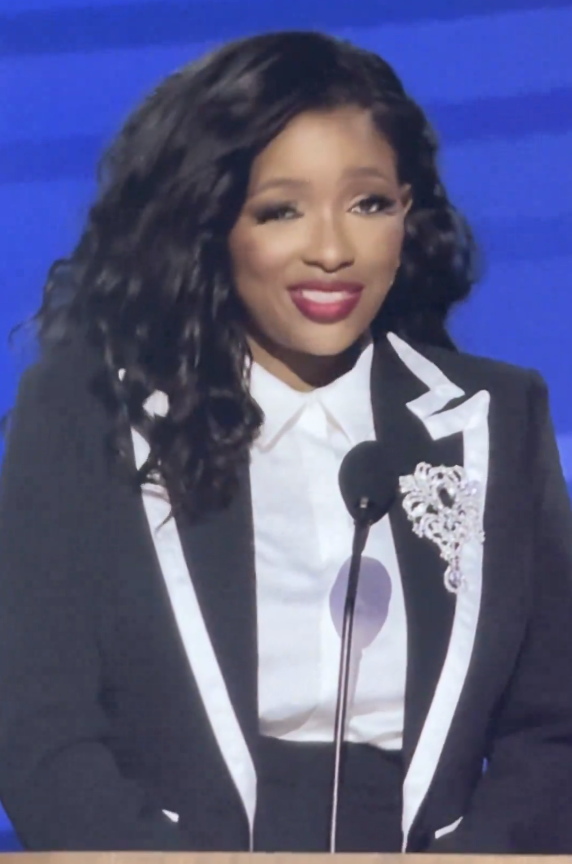
Jasmine Crockett, a former public defender and Democratic representative from Texas, is speaking now. Again, it’s easy to be cynical, but come on. Maybe we’re coming together. Maybe it’s working.

 Samuel Cohen