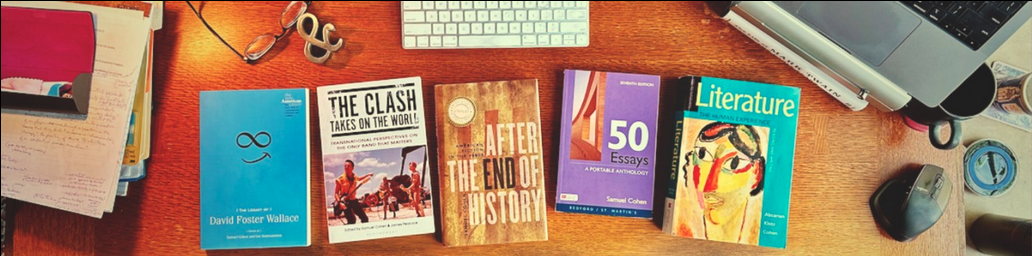
These instructions are for people enrolled in my spring graduate seminar, “The University in Fiction & Theory,” for next semester, in which you’ll be reading academic novels, which are different from campus novels in that they’re mainly about professors, not students, to make sure they’re not too interesting. You’ll also read work in Critical University Studies. The critical in Critical University Studies, BTW, isn’t critical in the sense of negative, but it also is. It’s like the criticism in literary criticism or even more it’s like the critical in critical theory, which is to say it’s critiquing, which is a fancy way of being negative without saying you’re being negative except you really are. (it’s also not critical in the medical condition sense, although it’s not not that either.)
You will read a book over break so we can have something to talk about on the first day of class and not have to just go around introducing ourselves to each other in great detail, not that I have anything against learning about your novel in progress or your cats or that I have anything against telling you all about my thirty-year-old MA fiction thesis full of solid Raymond Carver stories that he had unfortunately already written and about how suddenly it seemed attractive to be a literary critic (again, not critical, exactly).
The book is The Higher Learning in America: A Memorandum on the Conduct of Universities by Business Men by Thorsten Veblen. It’s from 1918 but it makes just as much fun of football and fraternities as I will all semester. Also business men.
So read that jawn over break and come in ready to discuss. Also be ready to talk about how many members of the incoming presidential administration will talk shit about higher education while being alumni of institutions of higher education and about how the supermajority in your state legislature likes to criticize (in the original sense) its state university because some people seem to really like that, including the people who run the universities. Also be ready to talk about how nothing has changed in a hundred years and also how everything has changed and there’s probably a theory the guy with the cool eyeglasses at the end of the table could explain to the class that would account for this, or maybe not.
Oh and also on the first day I will give my standard spiel about how we’re all grownups and we can all talk about politics without indoctrinating each other and that includes me and please don’t record me, there’s a state law about how you can’t record me unless I say you can and I don’t say that.
Also be ready to read novels about how being a professor isn’t what it used to be or never was and to read books and articles and listicles and cartoons and tweets or is it skeets now about how higher education is under attack slash falling apart slash in crisis slash underfunded slash teetering on the edge of the demographic cliff. Be ready to laugh at the word teetering after you say it a few times, because it really is kind of funny after a while.
You will give presentations, hand in daily questions, and write book reviews and papers on the course topic; in all of these, you are free to disagree that everything in your chosen profession is going to hell, if that’s really what you want to do. You will discuss the academic job market, which is what we still insist on calling it even though there are no jobs. You will try not to suddenly yell out in the middle of class that you’re not in graduate school to kill seven or eight years and why am I making you all feel so bad about it. I will say encouraging things I don’t believe.
We will end the semester talking about the big conference I will be going to over break where we give papers and nod at each other giving papers and in between in the hallway talk about how bad we feel for you.
See you in January!
*To my real students in my real seminar next semester: none of the opinions expressed above should be taken as representing those of the institution that employs me or even of me, exactly; see Juvenalian satire, Swift’s “A Modest Proposal,” and the novels of Philip Roth

 Samuel Cohen