This Is Why We Can’t Have Nice Things

So they’re destroying higher education in the US. It was maybe the thing we should have been proudest of. For decades after the Baby Boom filled campuses to bursting and the National Defense Education Act of 1958 responded to Sputnik by pouring billions of dollars into research, American universities were the envy of the world. They were envied for the research they produced and for the mass provision of a quality post-secondary education. US higher education was the engine of local and state economies, returning many times on investment, and it made the much-touted American dream at least plausible for generations of students.

Aside from demographic explosions and geopolitical anxiety, another thing that made this system possible was shared governance. No, really. When a few American college presidents caught the German research university bug and the professoriate professionalized along with the other nascent professions, the deal was that the disciplines would determine for each what counted as scholarship and who counted as a scholar and how best the material should be taught. And together, the faculty across these disciplines would be in charge of who got hired and promoted and what got taught on their campuses. They would share in the governance of their campus. This is where the freedom students and scholars have to learn and research and teach, academic freedom, comes from. Just as there had always been, university administrations would be in charge of the money, prostrate themselves at the stone steps to the state house, man their boards with the rich, but the idea was that those parties could not have influence beyond the board room. Of course, that ideal was tested and often forgotten in times of high national stress; as soon as the AAUP was founded to protect the line between the classroom and lab on one hand and the board and the state on the other, it found itself bowing under the pressure of Great War jingoism. Likewise during McCarthyism. But the ideal of that line, on the whole, even during the late 20th/early 21st century battles of the Culture Wars, survived.

Thank god that’s over.

And we have the super-rich to thank for it, the multibillionaires, rich people the likes of which we’ve never seen (to borrow a phrase from Trump that is creeping into the vocabulary of regular people in a way that gives me nausea the likes of which I have never felt except maybe before I learned I have a cod allergy). They are able to wield influence on universities in a way their forebears could not do from the golf course or the boardroom, and they have brought that influence to bear in a way that obliterates that line between campus and outside influence.

As CEO investor multibillionaire Marc Rowan, who drove Penn’s president from office, is quoted as saying in today’s New York Times, the problem is shared governance:

Universities can’t fix themselves, Rowan says, because they’re burdened with ancient and outmoded structures of authority–universities come from medieval guilds, for god’s sake, guilds not even of faculty but of students, as Rowan surely does not know–structures that keep them from responding to the times the way he thinks they should. So he must bring his influence to bear to make sure they respond correctly.

What’s to blame for this increased influence? On the list, put the legislative and policy victories of the old kind of rich people, victories that made the new kind of super rich people possible; the Citizens United decision (for which I will never forgive the ACLU), for making those victories possible; the unprecedented occupation of seats in the Capitol by the wealthy; the occupation of the chair behind the Resolute Desk by a billionaire as crooked as they come. The list goes on.

The results? The resignations of university presidents under fire for not sufficiently condemning Gaza protests or not eradicating “DEI” from their campuses ruthlessly enough are the showiest results, but the much more widespread chilling effect is that felt at universities that aren’t Harvard or Penn or NYU, public universities where administrations are bending over backward to comply in advance of legal requirements and in obeisance to executive orders not worth the magic marker ink they’re signed with. The “Compact” the Trump administration tried to get the presidents of nine top universities to sign was a failure only in the absence of compliant signatories. The message was heard loud and clear. The administrations of public and private colleges and universities, leaders of a whole range of institutions, rushed to comply in advance, to anticipatorily obey, and to do so in ways that violated shared governance. Faculty have been fired. Centers doing diversity work have been shuttered. Websites have even been scrubbed of offending words.

None of this would be possible if these schools were following their own bylaws and the long-established principles of American higher education. So put these administrations on the list too. And put many of the faculty on the list too, for not standing up tall enough, not yelling loudly enough, not risking our necks to oppose these violations of faculty governance and basic decency. Not because we would have been defending ourselves. Because we would have been defending higher education.

Add to this the Trump administration’s attacks on foreign students, cheered on by the self-appointed billionaire champions of [checks notes] whiteness, patriarchy, and Benjamin Netanyahu, and even more significant, the administration’s illegal refusal to release research funds due to institutions, and you’ve got a recipe for great, maybe irreversible damage to American higher education. Who would want to come study here? Who will write the biting campus satire of the future, possible only because of the greatness of the idea and the institutions? You can’t be disappointed in something if it’s not worth believing in.

So we’ve sold our campuses to the highest bidders. We’re letting something of the greatest value be diminished, something all of us should be fighting harder for–not just faculty, not just alumni, not just anyone who lives in a college town or a state where the university system is one of the biggest employers or in a country where innovation comes from university labs and seminar rooms energized by students who came here to get an education. Once the billionaires have finally taken over our schools, and our country, maybe it will be a blessing that there will be nobody around with the time and resources to write the history of how we lost everything.

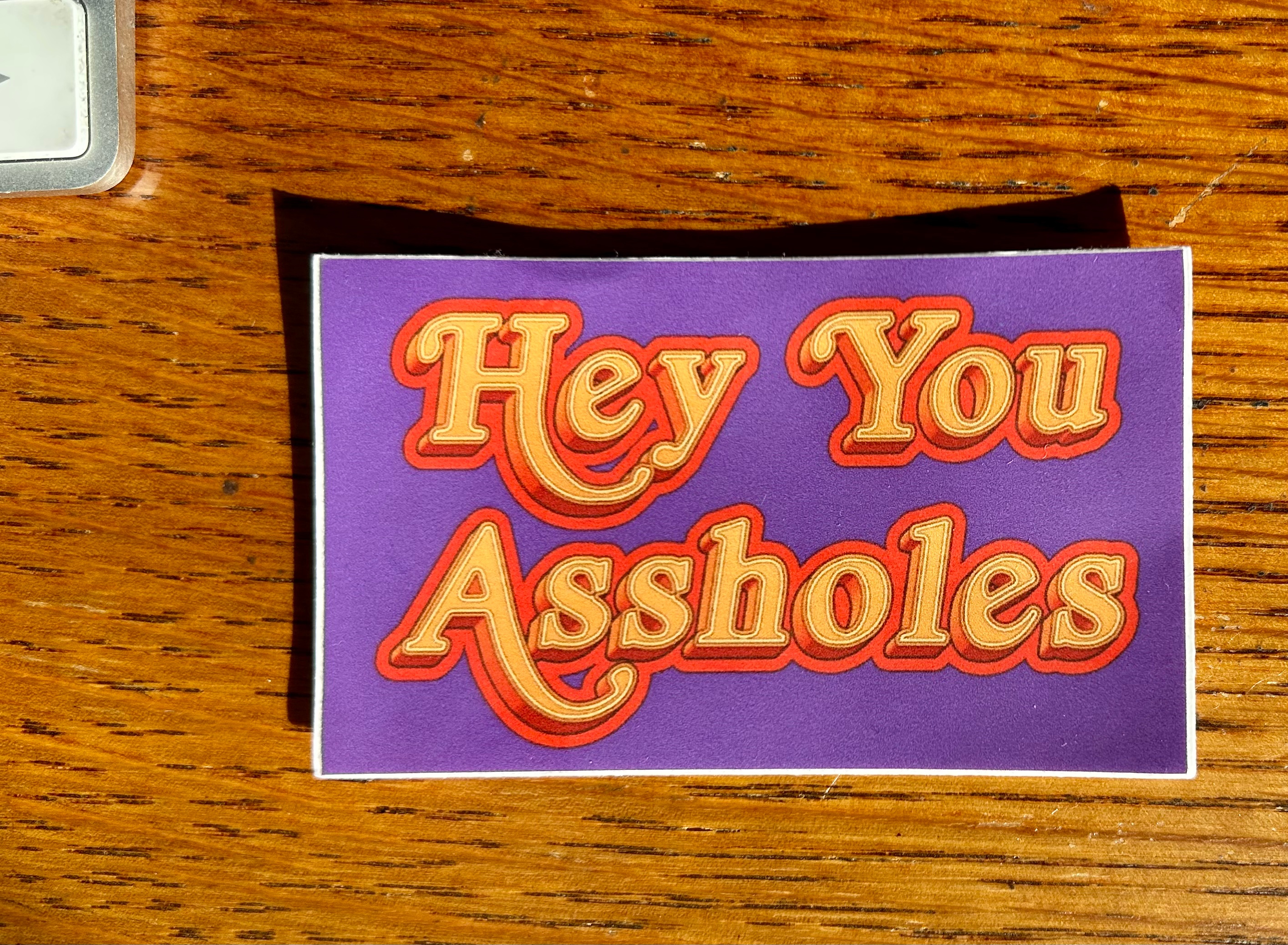
Hey You Assholes

An ICE agent points a crowd control weapon at a protester Tuesday in Chicago.
Photo Credit: Anthony Vazquez/Sun-Times

I haven’t written a thing on this blog since June because I’ve been busy and because I’ve been angry. Like maybe most of the people reading this, should such a thing happen, I’ve been moving back and forth between helpless angry and motivated angry, between there’s nothing we can do angry and we have to do something angry, between what on earth is there to say angry and there is too much to say to ever get it all said angry.

One good thing about all the things that are making me angry–the destruction of our institutions, the troops in the streets, the attacks on education, the attacks on immigrants, the attacks on journalism and health care and science–is that there are identifiable people to be angry at. I can’t prove that this is more the case than it has been in the past, but it feels that way, maybe because there’s so much showboating, personalizing, and video and audio and text from and about the people doing these things. What’s good about it, for my mental health, debatably and ask me again tomorrow, is that I can be angry at these specific people, these people who are doing these bad things everybody knows or should know are bad. It’s invigorating, the focus. They want to take responsibility for the illegal mass firings and the illegal defundings and the illegal kidnappings and the illegal tear-gassing? Okay, but then they get to take the anger too.

I’ve stolen the title for this post from one of my favorite recent books, a short fiction collection by a former student named Kyle Seibel that I can’t recommend highly enough because it’s dark and it’s edgy in the good way and it loves words and it’s got forty thousand pounds of heart. I hope he doesn’t mind my borrowing it.

Hey you assholes, if it’s somehow not clear, is what I want to say to the people I’m angry at for all the bad things they’re doing to my country. I’ve been trying hard not to say it so much in public lately because it’s becoming increasingly clear that respect for the First Amendment, academic freedom, the patriotism of protest, &c., is not at an all-time high. The identification of assholes and the naming of the bad things they are doing is not within my field of expertise, it could be argued, and so therefore maybe I will not be seen as protected by the traditional and hard-won protections of academic freedom for such acts of identification and naming. Nonetheless, I am angry at these assholes. We should all be angry at these assholes and we should say it and not stop there. We should get these assholes fired, voted out, and, if appropriate in individual cases, jailed for a long time. At the very least they should be shunned, hard. The men playing GI Joe in the picture up there but with real guns? The people who work hard all day to turn us against each other, to make some of us see others as enemies within? Shunned within an inch of their lives.

(Out in February)

One of the things I’ve been busy with in addition to all the everything–all the teaching of books and editing of books and writing and reading of things and administrating and all that–is talking in public about one of the things I’m angry about, which is the attempts by certain people to get books they don’t like out of libraries and classrooms. I have traveled far and wide, if by far and wide you mean to coastal Maine, northwestern Wisconsin, to the local public library in my neighborhood, and to my university’s library across the street from my office, in order to talk about this subject. Why book banning? Because it’s got everything–astroturfing, culture wars, white Christian nationalism, anti-intellectualism, intolerance. Because it runs counter to everything good about our experiment in democracy; because it embodies everything bad about post-Tea Party America’s hostility to that experiment. Is it less urgent than the disappearing of our neighbors, which has even reached to my little town? In one sense, certainly; in another, maybe not: if these concerted efforts to get books recognizing and exploring difference disappeared from our children’s schools and our public libraries are successful, even fewer of us will have encountered difference and even fewer of us will stand up against efforts to eradicate it, deport it, erase it. Are the attempts to blackmail our universities to stop teaching about difference and uncomfortable parts of our history, the attempts to send foreign students home for bad reasons and no reasons, less urgent than the soldiers tear gassing our own streets? Again, in one sense, certainly; in another, not at all: if our universities turn away from the world and from the difference within our own country, what will we have left worth saving?

Wrote a thing about that last part

I’m swinging, as I write this, from too much to say angry back to what is there to be said angry. Writing this has done nothing to make me feel better about what’s happening all around us as the leaves start to fall, the football games get played, the lives go on, but maybe that’s not much of a goal. We shouldn’t feel better. We should open our front doors and step out onto on our stoops, climb out on our fire escapes, stand in the middle of the street and say Hey you assholes. Hey you assholes, what you’re doing is bad and we’re going to get your asses shunned but good. Then of course we have to call all the representatives, sign all the petitions, run for all the school boards, canvas all the doors, write all the letters and op-eds and funny heartfelt and -breaking signs, walk together in big crowds, saying Hey you assholes all the livelong day. Sound your barbaric yawp, to quote a guy whose book got banned 150ish years ago in Boston and then sold like hotcakes in Philly because it turns out people don’t want to have books kept from them and don’t find obscenity where there’s only joyous celebration of difference. They don’t.

Hey you assholes: we don’t want this.

Going Underground

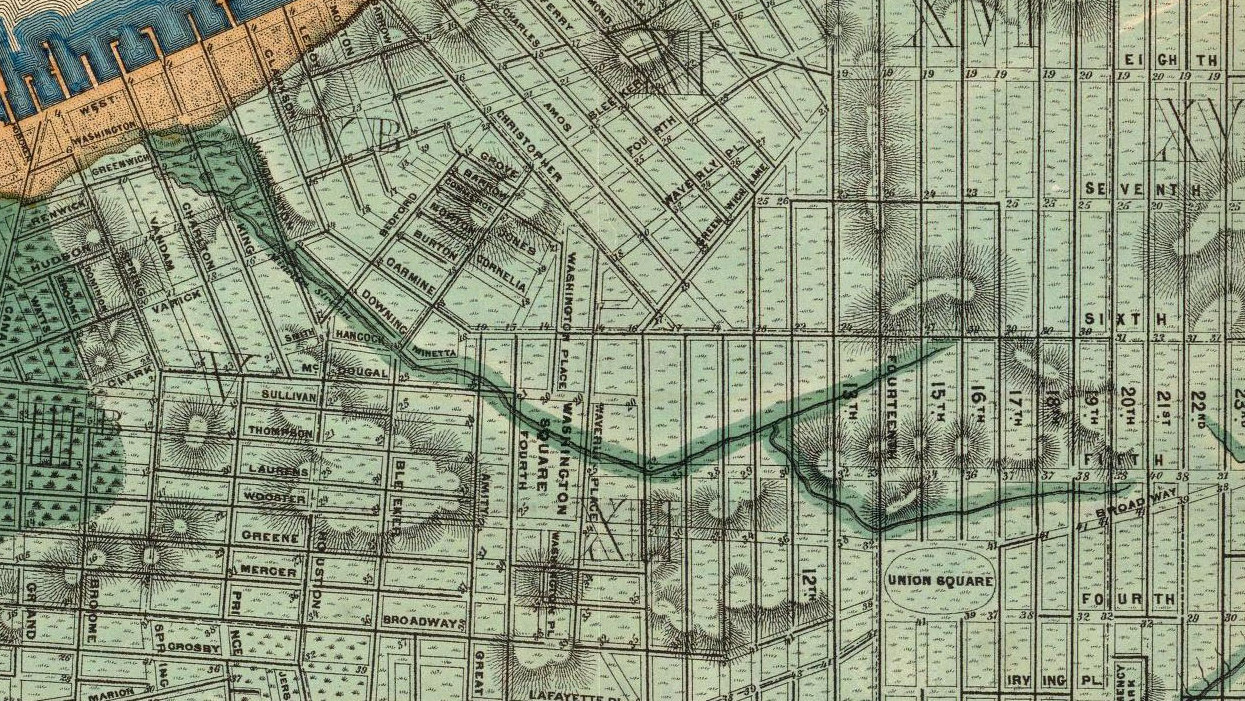
Sanitary & Topographical Map of the City and Island of New York (1865) by Egbert Ludovicus Viele

Below please find a few words I delivered to introduce the closing plenary of a seminar last week. It’s short but says something about what it’s like for humanities professors trying to help run departments, divisions, or colleges during the worst assault on higher education this country has ever seen.


Association of Departments of English/Association of Language Departments Summer Seminar 2025, New York University

Plenary V and Closing: Doing the Good Work in Uncertain Times

Good afternoon and thanks for sticking it out. I’m Sam Cohen, of the University of Missouri and the Executive Committee of the ADE, and I will be your presider this afternoon. I’ll begin by briefly introducing our speakers; then, after a few words from me, we’ll have opening remarks from them and then discussion.

Our speakers: Amy Woodbury Tease from Norwich University; Gillian Lord from the University of Florida; Beth Howells from Georgia Southern University; and Reginald Wilburn from Texas Christian University. Please see the resource document thingie for their bios (not now!).

I’d like to start us off with a little local history. And there’s a lot of it right on this block: The Silver Center was built (under the name Main Building) in 1892 on the foundation of the original 1835 Gothic revival building that stood here; its first five floors for decades housed the American Book Company, a textbook concern most famous for publishing the McGuffey Readers, which taught generations of Americans how and what to read; the Brown Building of Science, to our east, stands on the site of the Triangle Shirtwaist Factory fire. That’s a lot of history for one block, which is not uncommon in New York, a city known not so much for preservation as for development, unfortunately emblematized lately by a particular national figure. 

But the particular piece of very local history I want to focus on is the creek that used to run through the land on which Washington Square now stands, just to our west, Minetta Creek. It had two sources, one running south from what is now Fifth Avenue and 21st Street, just south of the Flatiron Building, the other beginning at Sixth Ave and 16th St, the two meeting at Fifth and 11th, just north of the park, and heading downtown and west to eventually empty into the Hudson. What makes this history interesting is what happened to the creek in the development of Manhattan from its pre-New Amsterdam state—before it was sold to Peter Minuit by the Canarsee, a group of Lenape Indians who neglected to tell him that they only occupied a small part of it. (So the story of that sale, usually told so the natives look like they got rooked—they only got twenty-four dollars-worth of beads and trinkets!—could also be told as the tale of Manhattan’s originary shady real estate deal.)

Minetta Creek was covered over in the 1820s, as the area through which it ran was developed, the potter’s field on its east bank closed and converted to a military parade ground and finally a park. But for decades the creek continued to run underground, popped up under West Village basements, could be traced, some said, by patterns of illness among residents under whose buildings it ran. There are at least two buildings in the neighborhood that house fountains that a hundred years ago filled with bubbled-up creek water. Whether it still runs under the streets is a mystery, but there are people who still look for it, drawn by the history and the mystery, maybe even attracted by the rich metaphorical possibilities of a hidden underground river running beneath a city.

Our speakers are here this afternoon, as our title says, to talk about doing the good work in uncertain times. I bring up the story of Minetta Creek to introduce this closing discussion because rather than focusing only on the uncertain times that are making the doing of the good work more difficult than the usual difficult, I’m hoping that we can talk more about the good work, and thinking about the story of the creek might help us do that, and I also just really like the story. I like it because the existence of a mysterious underground river appeals to me naturally but also because it appeals to me as someone trained in literature and writing. This creek is almost too much metaphor—it can stand in for the underlying forces of history, the costs of modernity, the unconscious and other subtexts. It’s even a metaphor for metaphor—for meaning-making. The good work we do is about many things, including of course the future employment for which study in literature and language (and folklore and history and art history and religion) prepares our students, but beyond that—beneath that—it’s about the work we help our students and faculty do to make meaning, to close read the world to see how it works and how it could work differently. It’s about a different kind of development, the development of individuals and communities through knowledge. It’s about insisting on these things against the things—like overemphasis on career, on the promises of technology, on the bottom line—that threaten to drive this good work underground.

 So I’m opening this closing with a metaphor, which, like all metaphors, you can take or leave. But please join me now in listening to the ideas for doing the good work that our speakers, out of whose way I will now get, will offer, and in continuing the discussion they’ll begin.


Requiem

Anna Akhmatova

Portrait by Kuzma Petrov-Vodkin, 1922

This set of poems was written by Anna Akhmatova from 1935-1961. Most of the poems were written in the 1940s, but Akhmatova did not think it would be safe for her to publish them at the time. They weren’t published in Russia until 1987. The below steals from a few different translations I could find on the internet (my favorite, Judith Hemschemeyer’s, is in the Norton World Lit but not online).

I wanted to post a version of Requiem tonight. Something about the last few weeks makes me want people who don’t know it to read it and people who do to read it again. I’ve been trying and trying to “describe this,” in Akhmatova’s words, to write about what’s happening to my country, and I will have to find a way, but for now the poems of a mother whose husband and son were jailed in another country, who had to memorize (rather than write out) her poems about the nightmare her country had become in order to stay out of prison herself, will have to do.

We’re not as far from this as we think we are.

No. Not under the vault of a foreign sky,
nor carried by a stranger’s broad wings —
in that time I stood with my people,
there, in our gray and unfortunate land.
— 1961


Instead of a Preface
In the terrifying years of Yezhov terror I spent seventeen months in
the prison lines of Leningrad. Somehow, at some point, someone
“recognized” me.
Then the woman standing behind me, her lips blue in the cold
light, a fellow sleepwalker who had certainly never heard my name
before, woke from her fetters and whispered in my ear (there, everyone
spoke in a whisper):
— And this? Can you describe this?
And I said:
— I can.
Then something resembling a smile slipped across the apparition
that only a moment before had been her face.


Dedication
The mountains kneel before our tragedy,
the great river is silenced at its source.
But our sorrow cannot break the prison locks;
behind them, despair tunnels endlessly on.
Will the spring breeze caress your face?
Will the sunset gently reveal you?
Not us. Our prison stretches to the sea:
everywhere the scream of key on stone
and the slogging stamp of soldiers’ boots.
We rose, as if for early Mass, and trudged
amid the tombstones of our ruined capital,
to face each other, more lifeless than the dead;
the sun sank low, the Neva misted,
and hope’s song came only on the wind.
The verdict. . . and she cries out,
suddenly alien, torn from the crowd,
as if life were ripped directly from her chest,
as if thrown to the floor, brutally, in haste.
But she continues . . . staggers on . . . alone . ..
Where are they now, my shadow friends
from those two years in hell?
What visions are theirs in the blind Siberian wind?
What do they see in the dim halo of the moon?
Will they hear this, my last farewell? My final greeting.


Prologue
Only a corpse could smile,
content, finally, to rest.
And like a useless appendage,
Leningrad swung from its prisons.
Mad from torture, contorted regiments
marched around the prisons’ naked walls
while farewell songs wailed
from train horns.
Stars of death stood above us
as innocent Russia cringed
beneath bloody boots
and the tire-tread of Black Marias.


1
They took you at dawn.
I followed, as if in a funeral procession.
In the dark pantry, children cried.
Before the Virgin Mother, a candle
drowned in its own wax.
Your lips were chill from the icon’s kiss.
The death-sweat on your brow . . . indelible.
Like the wives of Imperial Archers,
I shall stand howling under the Kremlins towers.


2
Quietly flows the quiet Don;
into my house slips the yellow moon.
He enters with his hat askew,
sees his shadow, that yellow moon.
This woman is sick to the bone,
this woman is sick and alone;
her husband dead, son shackled away.
Pray for me . . . for me, pray.

3
No. It is someone else who suffers.
I could not bear such pain. It isn’t me.
Shroud it in black; have the moon eclipse it.
Let them carry the torches away. . .
Night.


4
If I showed you, you silly girl,
beloved prankster, my merry
little sinner from Tzarskoye Selo,
what will happen to your life —
How three-hundredth in line, with a parcel,
you would stand by the Kresty prison,
your fiery tears
burning through the New Year’s ice.
See yourself at that silent dance, fixed
amid the sway of prison poplars. No sound.
No sound. Yet how many innocent lives
are ending...


5
Seventeen months I have screamed,
calling you home to me.
I threw myself at your executioners feet,
my son, my fate, my horror.
This moment is an infinite puzzle,
without solution, no, never for me:
man and beast, indistinguishable, crawling.
How long will I await this execution?
Only dusty flowers remain,
and the quiet censer, smoking;
and footprints that lead to nothing.
The immense star looks into my eyes
threatening, threatening: a promise
of ready death.


6
Time flies on, nearly weightless;
what happened, I don’t understand.
This city’s white nights peered
in on your prison cell; O, how again they watch
with a hawk’s burning eyes: pale nights
speaking of your lofty cross
and of death.


7
The Sentence
And the stone word fell
on my still living breast.
It is all right. I was ready for this,
after all. I’ll get by. Somehow...
I have the distraction of my chores:
I must destroy my past. Finally.
I must petrify my soul, then somehow
learn to nurture what remains —
Be that as it may... summer rustles
like a celebration outside my window.
I could smell it coming on the wind:
this sunny day; this empty house.


8
To Death
You will come in any case — why not now?
I am waiting for you—I cannot take much more.
I turned off the light and opened the door
for you. For you, so simple. And so strange.
Come to me, take any form you please:
burst through me like deadly hail;
strike me from behind like a weary thief;
fill my lungs, let me choke on your typhus gas.
Or recite the fairy tale you concocted: That little story
which makes us all sick; your mouthful of churned vomit —
so again I see the top of a policemans blue hat
and the caretaker, pale and trembling with fear.
It makes no difference. The Yenisei roils,
the North Star shines, and they will not cease today.
But the last horror is setting
in my beloved's sea-blue eyes.


9
Already the wing of madness
has shadowed half my soul,
held fiery wine to my lips,
and drawn me into its black valley.
I knew that to this devil’s wisdom
I must acquiesce: with tired ears
I listened to my garbling tongue,
then translated my own voice.
It says I may not take anything
along on my journey
(no matter that I politely ask
... no matter that I grovel) —
Not the fear of my sons face —
his paralyzed suffering — not
the day of that thunderous word,
nor the hour I met him in shackles.
Not his dear, cool hands,
nor a linden’s restless shadow
touched by the murmuring wind,
nor his final words of consolation.


10

Crucifixion
“Don’t cry for me, Mother.
Can’t you see I’m in the grave?”

1
A choir of angels glorified the hour,
the gray sky turned to molten light.
“Father, why hast thou forsaken Me?
Oh, Mother, please don’t cry for Me.”

2
Mary Magdalene tore at her breast, sobbing;
the beloved disciple watched Him, petrified.
His Mother stood away from them, immersed
in her own silence, where no one dared glance.


Epilogue

1
I learned how faces collapse under the weight
of a century, how terror peeks out from eyelids
cracked like stone tablets, and cuneiform suffering
etches its stony language on hollowed cheeks.
How a lock of cherished hair may turn
from black and gold to hasty silver;
how smiles wither on resigned lips,
and terror becomes trembling laughter.
I’m not praying for myself alone,
but for everyone who stood there with me
in crippling frost, and in July’s gnawing heat
before that blind red wall.

2
Again, the hour of remembrance draws near.
I see, I hear, I feel you; and I know them:

the fragile one we helped to the window,
the one who no longer wakes to her mother

land; and the girl who shook her beautiful hair,
saying, “I have come.” As if returning home.

I want to call out to them, each by name,
but the list that names them was stolen.

For them I weave a wide cloak
of shabby, eavesdropped words.

I remember them everywhere, always,
even in new troubles they are with me.

One hundred million people scream through
me, and if my tormented mouth is muzzled,

let them remember me as well, in my pen
ultimate moment, on my own remembrance day.

And if, by chance, this country should one
day decide to erect a monument to me, well

I graciously grant my permission.
But on these conditions: do not place

it by the sea, where I was born:
the sea no longer touches me;

nor plant it in the Tzarskoy garden, near
the sacred stump, where shades hunt me out;

but place it here, where I stood for three hundred
hours. Here, where the prison door will not unbolt

for me. Because I dread a peaceful death — for fear
I might forget the thunderous charge of Black Marias,

forget the arrhythmic drumming of fists on a door,
or the wounded howl of the old woman behind it.

So let the melting snow stream like tears
from the forged bronze eyes of my colossus,

while a prison dove coos from afar,
and ships glide silently along the Neva.

Dear Donald John

Dear Donald John,

We're just going to pull the band-aid off here: we're writing to tell you that we don't want to see you anymore.

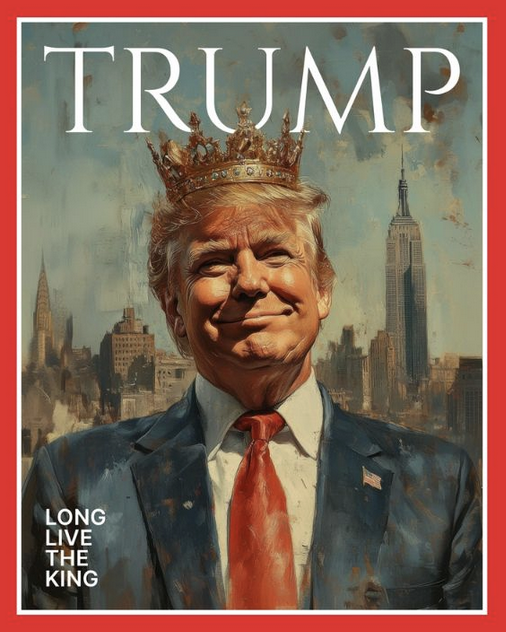
We don't want to hurt your feelings, because you seem to be kind of thin-skinned, like the kind of thin-skinned where if somebody makes a joke about you you'll run for president. And it's not you, it's us. We don't want you to be our king. Or anybody. But especially you.

We know you're going to be mad about this, because you don't handle rejection well, but if you take a deep breath and ask yourself if we'd be happy as king and subjects, I think you'll agree that there's just no way it would work out. You would be all Do this, do that, accept every unconstitutional thing I do and don't say a word about it, I'm going to rob the country blind to make me and my friends richer, we're going to outlaw all of the kinds of people we hate and watch it that might include you, and we would be all No. And you would try to round everybody up who disagreed with you and we would all be in the streets and not just with clever signs and your buildings would take a terrible beating. Do any of us really want an ugly breakup like that?

Don't be sad. There's other subjects in the sea. Someday you may even get to run a prison gang. But you don't get to be the boss of us.

We're sending back this picture you gave us. We don't want it. Please don't bother us anymore.

Not yours,
America


Gulf of America

With help from Merriam-Webster:

gulf

noun

1. A part of the ocean or sea extending into the land

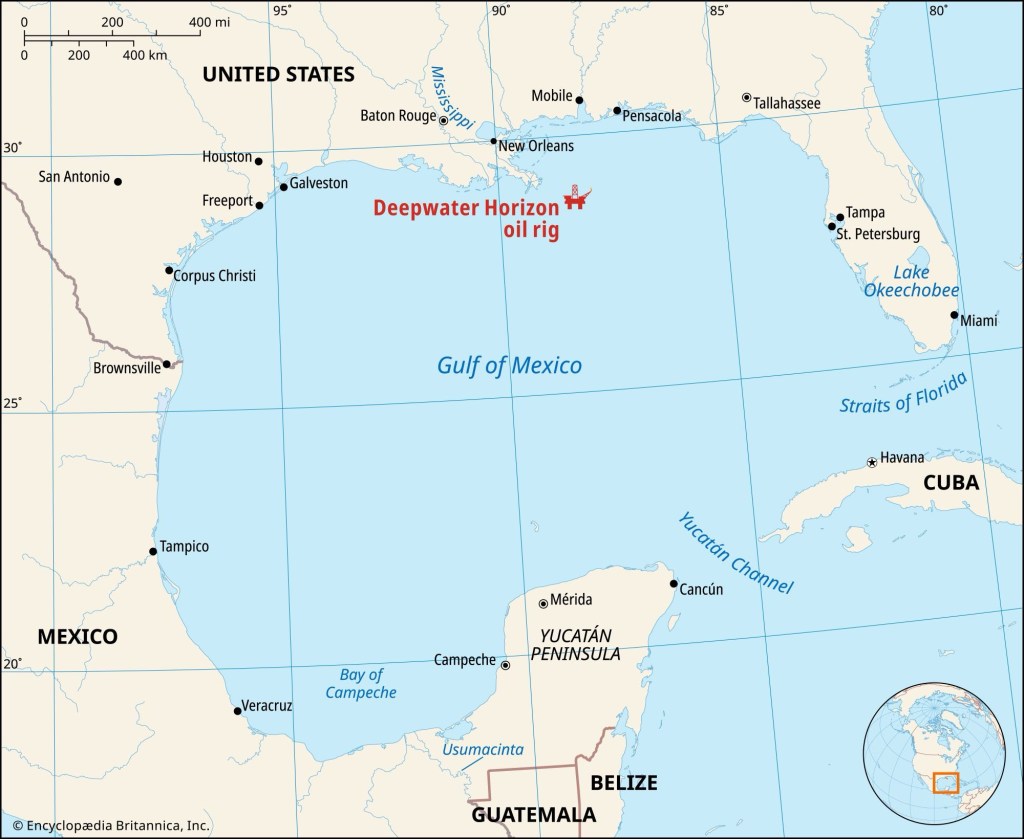
The U.S. has a few gulfs, among them the Gulf of Alaska, the Gulf of Maine, and the Gulf of Mexico. California has a couple more gulfs. The country’s also got plenty of sounds and bays and inlets (and even ten fjords), but only a few gulfs. If you look them up in a reference book (if you’re old and like books) or a reputable website, you’ll find pictures like the one above.

The Gulf of Mexico on Google Maps

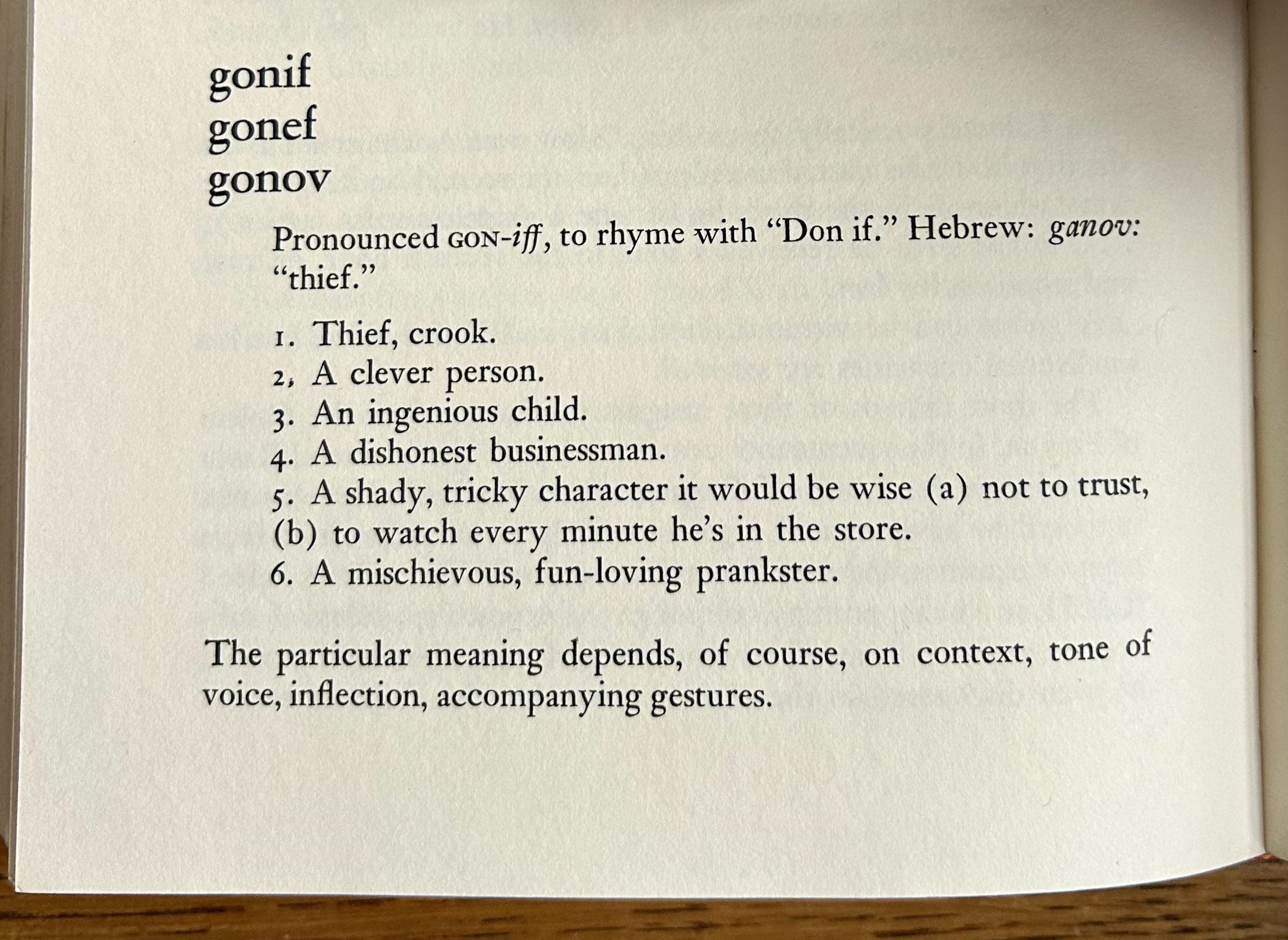
However, if you look them up on Google Maps, a formerly reputable website, you will find that the Gulf of Mexico has a different name. The Goniff in Chief* had a big idea, and he was so excited about this Big Idea that he made a proclamation, like a little King. And he decided there should be a day dedicated to his Big Idea.

The President’s Big Idea

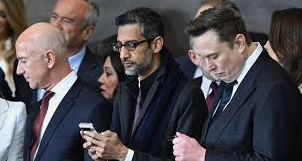
Why did Google go along with this? According to the BBC, “Google said it was making the change as part of ‘a longstanding practice’ of following name changes when updated by official government sources.” A cynic might suggest that the real answer lies in the tech CEO tableau below, taken at the inauguration.

Bezos to Pichai to Musk

Since the Gulf is just a big giant stretch of water and has no government to object, apparently our President, if that’s what you want to call him and who am I to stop you, can just call it whatever he wants and that somehow has the force of law, or enough force to bring a Master of the Tech Universe (shout out to Tom Wolfe) to heel. Greenland, on the other hand, has, unfortunately from only this one point of view, a government and even people living there, so if we want it renamed, we have to buy it. But how? As of yesterday, there’s a bill for that:

Thanks, Rep. Earl L. “Buddy” Carter (R-GA). What do you get an authoritarian with the mind of a child who’s already got everything? Asked and answered.

2. A deep chasm: ABYSS

This hemispheric mislabeling/conquest misheggos is only one small part of the abyss that is opening up before us as a result of the country’s losing its misinformed, social media-misshapen mind and electing the GIC. Impending financial crash? Check. Full-blown constitutional crisis? Check. Crippling of scientific research, social services, and higher education? Check. Explicit bigotry enshrined in a flurry of deadly policies? Check. Loss of faith in our national project, always fallen short of but never just thrown out and lit on fire? Check. Will we fall into this abyss, this chasm, this Gulf of America, where we rename things because we want to Own Everything and Don’t Care About Other People? Can we stop it now? When the Vice President says judges can’t tell members of the executive or legislative branch what to do or more importantly what not to do, what is there to do?

3. WHIRLPOOL

Odysseus, just trying to get home to see his faithful dog, had to sail between Scylla and Charybdis, the man-eating monster and the ship-swallowing whirlpool. The rotating waters of the Strait of Messina, off Sicily, are only dangerous to small craft, a still-reputable website tells me, but that’s what experts think inspired the Charybdis of Greek mythology.

To be between Scylla and Charybdis, a saying still known by the kind of people who consult reference books, is to be between a rock and a hard place. I don’t know if that’s the right saying to capture where we are right now. What are our two impossible choices? Do we have any choices? Wouldn’t it be nice to have some?

4. A wide gap; the gulf between generations

The Gulf of America that bothers many of us the most about what’s happened in the last three weeks–it’s only been three weeks!– is the widening gaps being driven between already divided Americans. The greatest gap is one that’s not so much between the Haves and the Have Nots but between the Have Everythings and Everyone Else, a divide that “gap” and “abyss” and “chasm” don’t begin to capture. There’s the gaps between the right kind of Christian and everyone else, between white and Black, straight and not, right and left, American and foreigner, but all of these gaps, these gulfs, as significant as they are, aren’t just preexisting conditions worsened by people in power who don’t care. They are the gaps exploited by the Have Everythings so they can have more: more money, more power, more control to remake the country as they want it. They’re not just widening our gulfs; they’re using them, feeding off of them.

Renaming the Gulf of Mexico in itself is just silly. But it stands for the ascendancy of jingoistic bullying, of xenophobic hatred, of disregard and even disdain for following the rules that animates our current rulers. It’s what swept them into power and it’s what so many of your neighbors share with them, if you’re being honest. There’s your Gulf of America. You’re standing in it.


*goniff, as defined in Leo Rosten’s The Joys of Yiddish. Number 6 does not apply, as no proof of him loving fun is in evidence

Profiles in Depravity

I would like to be working right now, at 4:41 Thursday afternoon on the 30th of January in the Year of Our Lord Two Thousand Twenty-Five. I was working on the plan for a course for next semester earlier, I have essays for a collection to edit, I have some prep to finish for tomorrow’s seminar–but I watched this and now I just can not.

I’ve spent the last two days (doing my job and) watching RFK Jr. and Tulsi Gabbard lie, misrepresent, and conspiracy-theorize their way through their confirmation hearings. It’s really hard to watch. Watching eight minutes of this video was somehow much worse. This was watching the country be destroyed in real time.

The great thing about millions of your fellow citizens electing a bullshitter who’s also filled with hate and completely lacking shame is that it brings you moments like the one I just watched, in which the chief executive of a nation of what, 330-something million people clumsily tries to blame a still-fresh, un-investigated, bodies-still-in-the-water air disaster on either the federal government and/or an airline hiring someone not white and male without even the thought of providing a shred of evidence of anything, really.

Before I watched this, I was in a Zoom meeting where colleagues across the country worried that students at their schools are scared to leave their dorm rooms to go to class because the Bigot in Chief has turned ICE into his own private deportation police, and then I had the privilege of watching him affix his comically narcissistic signature to an “executive order” ordering his transportation secretary (a former star of The Real World: Boston, of course) to stop hiring anyone but white men. He referred repeatedly to the importance of having people in these jobs with “large brains,” “the most competent people,” not “people there for any other reason.” Then questions from the press gave him the opportunity to speak ignorantly and hatefully about tariffs against Canada and Mexico, about putting deportees in Guantanamo Bay (“there are countries that won’t take back their criminals that they sent in to us”) and about his attempts to persuade Jordan to take displaced Palestinians (“They’re gonna do it, okay–we do a lot for them and they’re gonna do it”). Another question gave him the opportunity to show that he couldn’t remember the date by which he said federal workers had to be back in the office or be fired (“if they’re not going to come into the office and report as per the date that you know what it is, everybody knows what the date is, it’s been very well documented”).

He’s got one of the most important jobs in the world. He is not the most competent. He is not in possession of “the best brain.” He is an ignorant, uncurious bigot. His remarks demonstrate that he has no idea what he is talking about and has no interest in having one. The best part: when asked if he’d spoken to families of crash victims, he said, “I don’t want to uh comment on that” (so, okay, that’s a no) and when pressed about going down to the site, he said, “I have a plan to visit, not the site, because uh what is, you tell me, what’s the site, the water, are we going to go swimming.”

Are we going to go swimming.

This country is rich with people who serve others, who believe in and devote themselves to work that helps keep people safe or healthy, that teaches them, feeds them, aids them in organizing their communities, their towns, their lives, and who don’t enrich themselves doing it. A man who can make a joke like this, if that’s what it was, or can this heartlessly dismiss the notion of visiting the spot where the planes went down, five miles from his home and office, is not a man who has it in him to perform public service. He doesn’t believe in it and he would never devote himself to it. I am sure he thinks that real public service, like serving in the military, is for suckers. We know this. We know who he is. But sometimes seeing a concrete example of it like today’s can still bring you up short. He’s not there for us. Any of us. And sometimes it seems worth it to just say it out loud. And then get back to work.

Cocktail of the Week

This week’s cocktail is the mezcal negroni.

The negroni is a classic cocktail usually made with equal parts gin, Campari, and sweet vermouth. This version substitutes mezcal for gin. Follow the recipe this week and try it yourself. This is a good week to try it. Monday of this week would be a good day of this week to make it and try it. You will want to have it approximately 1400 or so more times. Hopefully no more times after that.

Ingredients

1 oz. mezcal 

1 oz. Campari 

1 oz. sweet vermouth 

Orange slice (garnish) 

Mezcal is made from the agave plant. It is made from the heart of the agave, the piña. Most of it is made in Oaxaca, a state in the south of Mexico. It is made by Mexicans, about whom you will be hearing a lot in the next four years, most of it lies. Mezcal has a pronounced smoky flavor because of the roasting of the piña, but, like gin, it is made with fruit and herbs and so is complicated, like people when not being described by racists. People are sometimes confused about mezcal because it sounds like mescaline, but it is not a psychedelic. You may be disappointed by this at some point in the coming four years of mezcal negroni consumption.

Campari is from Italy, where they also had fascism. The modern version of vermouth also comes from Italy, though the name is a French corruption of the German word for wormwood, an original ingredient, so the flavor profile offers accents of a different national authoritarianism as well as hints of complying in advance.

The orange originally comes from China. The less said about this, the better.

Directions

The classic negroni is said to have been born shortly after the end of the first world war, in Florence, when a Count Negroni (honest!) wanted his bartender to make the vermouth, Campari, and soda cocktail he was drinking stronger. Gin was added. The name of the cocktail he had been drinking? An Americano. Do with that what you will.

Modern gin, interestingly, came from Holland and became the national booze of England in the late 17th century, as the Glorious Revolution brought to the throne William of Orange, who hailed from The Hague and was born Prince of Orange after his father died a week before his birth. After a few mezcal negronis, you will be tempted to draw parallels to and maybe even adopt “of Orange” as a nickname for a prominent contemporary figure. Resist the urge. Those nicknames aren’t funny.

Oh yeah, directions.

Fill a mixing glass with ice.

Add all ingredients (except for garnish) and stir.

Strain into a rocks glass over ice.

Garnish with half orange slice.

As a cocktail, the mezcal negroni is simple to make, but it boasts a complicated combination of flavors. There is bitterness, smokiness, and sweetness. It drinks easily for such a strongly flavored drink, which can be problematic as it is all alcohol and no mixer. But come Monday, you will be glad you added this cocktail to your roster, as it captures the country being on fire and your bitterness about what we’ve come to. The sweetness is yours to try to find. L’chaim!

1/6/2025

If you’re not the kind of person who watches C-SPAN, you might have missed this scene today: Bruce Fisher, the husband of brand-newly re-sworn-in U.S. senator Deb Fischer (R-NE), refusing to shake the hand of Vice President Kamala Harris. He offered a curt nod and returned her “thank you,” but could not manage the handshake. Just couldn’t do it, for reasons, none of which could possibly include misogyny or racism or anti-wokeism, which it hurts even to type, it’s so stupid.

I offer this:

Is it ungenerous to call this guy a piece of shit

Sam Cohen (@samcohen.bsky.social) 2025-01-06T19:49:55.035Z

Do I regret my response? Do I really wonder if it is ungenerous? I do not and I do not. (Do I regret the absence of a question mark? I also do not. It’s a convention of online style, grandpa.) On the 6th of January, four years to the day that Deb and Bruce’s Grand Oligarchy Party stormed the building that they were standing in this morning, bent on derailing the certification of the election of the other party’s nominee, the spouse of a senator Was Going to Show Them.

Deb Fisher is not a new senator. She defeated Bob Kerry in 2012 to win her seat, won another six year term in 2018, and won a third in November. I don’t know what her husband did the other times she was sworn in. I do know that his family owns a very large ranching operation in Nebraska, large enough for the family’s children to own the majority of the stock in the family corporation, while Deb and Bruce, who moved to Nebraska five years ago, have held on to a minority share. I don’t want to judge people for owning a giant cattle ranch in Nebraska, where I am sure they are very nice to their employees, the environment, their neighbors, and the cows and I am sure their politics have nothing to do with any of that.

I also know that in 2021, Deb condemned what happened on January 6. In a statement, she said, “These rioters have no constitutional right to harm law enforcement and storm our Capitol. We are a nation of laws, not some banana republic. This must end now.” She also said that although she didn’t like the outcome of the election, fraud had not been proven, and she voted to certify the results. I also know that by May, she voted against the creation of an independent commission to investigate the riot, and that three years after the riot, she endorsed the man behind the riot. Did she ever vote to impeach that man? She did not.

Do I know how Deb feels about her husband’s little tantrum this morning? I do not. But she married him and had no visible reaction to what he did, or didn’t do, though I do imagine she will be answering questions about it for a few days.

I do know that Deb doesn’t like abortion, so much so that she’s all for a ban without exceptions. Things she’s not for? The ACA, restrictions on gun ownership, or the scientific consensus on climate change (through an aide, she has said it’s happening but it’s due to “natural cycles,” which, thanks for sharing your expertise, Dr. Fischer).

To what does this all add up? I don’t know. I do know that this senator, whose generally execrable positions are standard for today’s GOP, still on one occasion–the events of four years ago today–stood up to the con man to whom her party sold whatever tiny soul it had. For about five minutes. I also know that her husband stood in the building attacked by rioters sent in by that con man and refused to shake the hand of half of the ticket they were trying to deny the White House to. I know that people died and our democracy will never be the same. I know that, as reported today, the amount of ammunition confiscated on that day was enough to have shot every sitting member of the House and Senate five times each.

Rioter smashes Capitol window with police riot shield

Not shaking someone’s hand is the definition of petty. There’s a picture in the dictionary next to “petty” of someone not shaking someone else’s hand. I know it’s petty to not shake someone’s hand because I’m a petty person and have fantasized, repeatedly and lamely, about not shaking the hands of public figures I find awful, if given the chance. But to do it for real, today, there, at the scene of the crime? It’s still petty, but it’s also a reminder of something big–that the people who will be in charge in two weeks, the people who support them, the aggressive, sometimes violent movement of fake victims who shall not be tread upon unless it’s by the boot they choose, is big on ignoring the norms that hold democracies, however flawed and rigged and deeply undemocratic, together.

Do I think Harris should have called out Bruce Fischer? Delivered a sharp slap to his impressively pasty chops? I do not. She did what people do when they respect other people, occasions, norms. Do I think those of us who are not willing marks of the once and future con man in chief can afford to keep relying on norms and precedents and procedures and institutions and courts when the people we hope they’ll protect us from could manifestly give a shit about them?

I do not. On this fourth anniversary of the attempted insurrection of January 6, 2025, we should promise each other that we won’t comply in advance, that we won’t rely on norms, that we’ll fight Project 2025 and all the little local and state projects designed to support the GOP agenda in any way we have to. We can’t shake hands with the devil, the way any number of Democratic politicians seem eager to. There’s no working with a man like this man or with people who would help him do what he wants to do to us and for himself. Maybe Bruce Fischer has shown us something after all.

First lady of Poland skipping handshake opportunity

Next Semester’s Seminar Notes for Future Experts in a Dying Field*

These instructions are for people enrolled in my spring graduate seminar, “The University in Fiction & Theory,” for next semester, in which you’ll be reading academic novels, which are different from campus novels in that they’re mainly about professors, not students, to make sure they’re not too interesting. You’ll also read work in Critical University Studies. The critical in Critical University Studies, BTW, isn’t critical in the sense of negative, but it also is. It’s like the criticism in literary criticism or even more it’s like the critical in critical theory, which is to say it’s critiquing, which is a fancy way of being negative without saying you’re being negative except you really are. (it’s also not critical in the medical condition sense, although it’s not not that either.)

You will read a book over break so we can have something to talk about on the first day of class and not have to just go around introducing ourselves to each other in great detail, not that I have anything against learning about your novel in progress or your cats or that I have anything against telling you all about my thirty-year-old MA fiction thesis full of solid Raymond Carver stories that he had unfortunately already written and about how suddenly it seemed attractive to be a literary critic (again, not critical, exactly).

The book is The Higher Learning in America: A Memorandum on the Conduct of Universities by Business Men by Thorsten Veblen. It’s from 1918 but it makes just as much fun of football and fraternities as I will all semester. Also business men.

So read that jawn over break and come in ready to discuss. Also be ready to talk about how many members of the incoming presidential administration will talk shit about higher education while being alumni of institutions of higher education and about how the supermajority in your state legislature likes to criticize (in the original sense) its state university because some people seem to really like that, including the people who run the universities. Also be ready to talk about how nothing has changed in a hundred years and also how everything has changed and there’s probably a theory the guy with the cool eyeglasses at the end of the table could explain to the class that would account for this, or maybe not.

Oh and also on the first day I will give my standard spiel about how we’re all grownups and we can all talk about politics without indoctrinating each other and that includes me and please don’t record me, there’s a state law about how you can’t record me unless I say you can and I don’t say that.

Also be ready to read novels about how being a professor isn’t what it used to be or never was and to read books and articles and listicles and cartoons and tweets or is it skeets now about how higher education is under attack slash falling apart slash in crisis slash underfunded slash teetering on the edge of the demographic cliff. Be ready to laugh at the word teetering after you say it a few times, because it really is kind of funny after a while.

You will give presentations, hand in daily questions, and write book reviews and papers on the course topic; in all of these, you are free to disagree that everything in your chosen profession is going to hell, if that’s really what you want to do. You will discuss the academic job market, which is what we still insist on calling it even though there are no jobs. You will try not to suddenly yell out in the middle of class that you’re not in graduate school to kill seven or eight years and why am I making you all feel so bad about it. I will say encouraging things I don’t believe.

We will end the semester talking about the big conference I will be going to over break where we give papers and nod at each other giving papers and in between in the hallway talk about how bad we feel for you.

See you in January!

*To my real students in my real seminar next semester: none of the opinions expressed above should be taken as representing those of the institution that employs me or even of me, exactly; see Juvenalian satire, Swift’s “A Modest Proposal,” and the novels of Philip Roth