The period goes inside the closed quotation mark unless there’s a citation–the source is part of the sentence
Signposting–letting your reader know where you’re going–is important
People have been banning books as long as there have been books
Americans have been banning books since before America existed
Attempts to ban books have skyrocketed since COVID
Getting to the end of a novel doesn’t just let you know what happens, it lets you look back and think about what it all adds up to, what it meant that things happened the way they did
The feeling when you are on the way there and looking forward to that act of looking back is called the anticipation of retrospection
In retrospect, this time will appear in histories of the US as a time when the country lost the plot, when it couldn’t see where it was going
Many of the people challenging books are also anti-vaxx, -mask, -school closures, and -transgender
Literature lets us see the world through others’ eyes
Meanness is a powerful force
Kindness seems like weakness to some, strength to others
We revise so we can improve
Peer review allows you to see things through another set of eyes, showing you errors and possibilities that you couldn’t see yourself
There is more value to a group of people spending fifty minutes together three times a week to talk about books than most people understand
You write daily reading responses so you know what you think and can share it
What we think together matters
Ostranenie or defamiliarization is what the Russian formalists say defines literature–it’s writing that makes the world strange in order that readers might see the world anew
Many attempts to remove books from schools and libraries are motivated by something other than is claimed
Around a third of challenged books are about people of color and LGBTQ people
American history is the history of some people being cruel and encouraging cruelty and of other people trying to make us kinder
The supermajority of the state legislature would rather we didn’t talk about this
The President-Elect has it in for the Department of Education
Gather support; quote and paraphrase and integrate; cite your sources
Some sources of cruelty: not being able to see outside ourselves, not being able to see people as people
Some sources of kindness: being open to thinking about something other than ourselves, to learning, to being taught
If you read something and learn from it, cite it: it taught you something, and that needs to be recognized
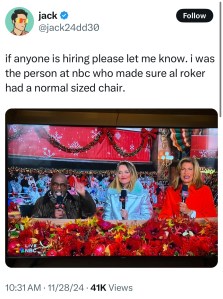
On this Thanksgiving day In front of the Macy's Thanksgiving Day America Fuck Yeah Parade I am here to say No thank you I'm not feeling it I don't want a tasting bite I don't have the stomach for the lies today I don't want Hoda and that other lady telling me as his balloon floats by that Ronald McDonald will be stopping by local franchises to thank employees for their hard work on Thanksgiving I don't want Al Roker introducing the Peacock float Extolling the virtues of its streaming content As its electronic head swivels its electronic eye Surveilling the crowd standing in the rain Telling them what to buy and watch and cheer for and be No thank you, Macy's Thanksgiving Day Interpellation Parade Not today What am I most thankful for today, Al Roker? I know you were asking Cynthia Erivo But let's say you were asking me And to your question I say No thanks But also thank you for reminding me of what you did in the White House that one time And also what the fuck are we doing Yes we should we be in the streets But we shouldn't be helping the corporations sell themselves We should be saying no thank you in the streets And we should be saying it to the asshole New York never liked The asshole who wanted to be the richest man in Manhattan The asshole who didn't pay his workmen or keep his promises The asshole who just pulled the biggest con Again And to all the assholes eager to help him sell himself, lies, and America, for parts We should be in the streets saying No thank you To the social media moguls flying their private jets to Mar a Lago To the billionaires selling us Out Instead, understandably, for now, we're home Being thankful for each other Being scared for each other and of each other Being angry Watching this stupid fucking parade Tomorrow let's say no thank you No thank you to the Robber Baron in Chief who never really even baroned but just went straight to the robbing No thank you to this parade liveblog poem even And sorry for the cursing
It’s been eleven hours and three days since the AP called the Presidential election in favor of the man who held the office during the worst presidency we’ve ever had. Nothing compares 2 him, of course, but I think it’s safe to say the 2024 version of Trump will supplant the 2016-2020/early 2021 version. Many of us think this is a bad thing. However, in spite of what is to some of us a confusing set of numbers, it is clear that our next, sure to be even worse president seems to have gotten significantly more votes than his opponent, and he’s gotten them from people who one assumes do not think this is a bad thing. Which raises questions, such as Why do they not think it is a bad thing? and What is wrong with this country? and What the fuck?
I don’t know how to answer those questions (especially the last one, which isn’t really a question). But I do want to talk about the title of this post, which I swear has something to do with all of this: I went to a high school headed by a man whose (I hope but seriously doubt secret) nickname among the students was FUBAR. Not coming from a military family, this was how I learned what the old Army-originating term FUBAR meant or, more accurately, what some people meant by it. At that school in central New Jersey (you’re damn right it’s real, @njgov), we thought it meant Fucked Up Beyond All Repair.
I have learned at some point in the intervening almost forty years that some people think it means Fucked Up Beyond All Recognition. Merriam-Webster has it as Recognition. The Oxford English Dictionary also has it as Recognition (and includes the sanitized “Fouled” that even I, who do not come from a military family, know is a coverup).
The OED also tells us that the first recorded use of FUBAR in print was in 1944 in Yank, a weekly magazine produced for US soldiers during WWII. Yank was the idea of a man named Egbert White, who had worked for Stars and Stripes in the war before WWII, which nobody then knew to call World War I, so they just said it was a great war. The great war. Apparently the inclusion of a pin-up photograph was a big draw for the magazine, whose name, again, was Yank. White himself got yanked from the leadership of the paper over certain editorial decisions; you can read about it in his essay, “A Free Press in a Citizen’s Army,” which for some reason appeared in the Journal of Educational Sociology.
I never saw any evidence of FUBAR’s being actually fucked up, beyond repair or recognition. He was a genial and to me distant presence. He came to a track meet once and watched my race and had a chat with my mom. My sense is that FUBAR was just an old nickname that some boys a long time ago had given him because they were boys a long time ago. But I was as oblivious then as I am now, so who knows. I do know that before graduation my friend Taylor and I stole a personalized From the Desk of, &c. notepad off of his desk, and he found out about it some time later because I used a sheet from it to write a thank-you note to my college counselor, who helped me get into a much better college than I deserved to, and it was reported back to me that FUBAR was amused. He has been dead for a quarter century, as has my college counselor. I think I still have the rest of that pad somewhere, but I wouldn’t know who to write to using it.
I’ve gotten a little deeper into all of this than was strictly necessary because I’ve been putting off saying what I want to say about the bad thing that has happened: it’s really, really bad. I don’t need to go into how right now. As I said on here a couple of weeks before election day, Trump is a bully who’s never demonstrated he has any interest in right or wrong, the Constitution, or the welfare of other people. A few days after that, again on here, I was wondering about the effects of seeing a man like that on our ubiquitous screens, on us and especially on the youngest of us. And a couple of days ago I was thinking about my students’ reaction to what happened the day before. His presidency very well could be as much of a disaster for the people he’s conned into thinking he will take care of them as for the people who know he won’t. Most of my students seem to think it will be a disaster for them, for people they love, and for people they don’t know but don’t want to see hurt, and I can’t say they’re wrong.
My question for right now is which kind of FUBAR we are. Are we Fucked Up Beyond All Repair? Or are we just Fucked Up Beyond All Recognition? Is there a difference? Say it’s the latter. Many people are saying they don’t recognize their country anymore, seeing so many of their neighbors vote for someone they think we all ought to have rejected a long time ago. Is that the kind of FUBAR we are? If so, can we imagine the country becoming more like we thought it was, more like we want it to be? Can we hope that our neighbors will wake up to the reality of what just happened, to what the country will really be like under Trump 2, to what he will do to them too?
Or say it’s the former, that we’re Fucked Up Beyond All Repair. He’s packed the courts with people who don’t seem to care about the law except in terms of what it can do for certain people, classes, religions. He’s got legislators and captains of industry in line. He’s got journalists bothsidesing the apocalypse. (On tonight’s panel, for an opposing view, Satan.) He’s got some people scared and some people feeling they’ve been given permission not just to think but to say and do what they say we all are already thinking and have always wanted to say and do. (Except we weren’t, and we haven’t.) He’s got everything lined up for four years of unbridled meanness and limitless corruption.
Maybe the most important question for right now isn’t which kind of FUBAR we are. But maybe it is–maybe we can’t ask ourselves any other questions about what to do, or what we can learn from how we got here, or how we can end up somewhere better, until we answer that. And the answer won’t in the end be about facts. It will be about what we want to accept. Knowing how hard so many people worked for an outcome different from the one we have apparently gotten, I don’t think Beyond Repair is it.
I taught class this afternoon. My students looked tired.
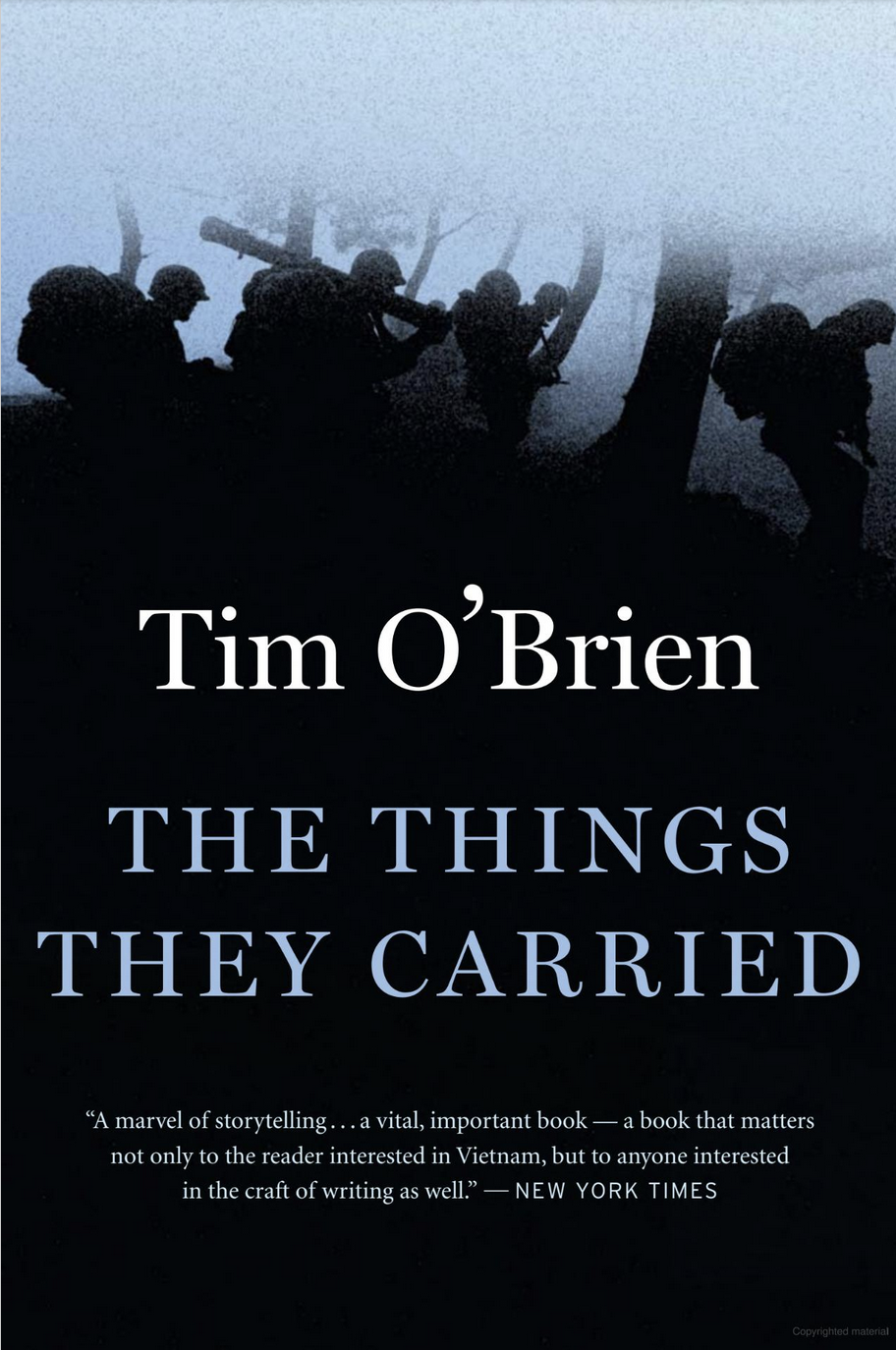
I’m back in my office, at my desk, starting this post for the fourth time, trying to say something about what happened last night. I’ve got a few ideas but I’ve got a hole in my heart and I’m realizing that it’s more important what the roomful of twenty-year-olds I just spent an hour with today are feeling. They didn’t want to talk about the election; I asked. They wanted to talk about The Things They Carried, and they did a good job, talking about the material and emotional things O’Brien’s young soldiers carry around with them and the stories they tell themselves in order to try to understand their experience of the war in Viet Nam. Some of them seemed distracted. They’re also stressed out and anxious and scared, and some of them seem angry, and who can blame them. Look at the world we’re giving them.
I ended class five minutes early when I noticed how down many of them looked. I asked if they felt like they looked and they said yes and we talked about what might help and we came up with getting some sleep, hydrating, calling moms, and getting off of social media. I’m going to try to take our advice too. We’re all going to have to think about what comes next, but for now we need to avoid listening to people who think they have the one true story of whose fault this all is and we need to take care of ourselves and the people around us. I try not to call my students kids, but they sure seemed like kids today, and they sure seemed to be carrying some heavy weight.
One of the worst things about US politics is our campaigns–the incredible length, the obscene amounts of money, the pandering both to the base and to the ever-shrinking number of somehow, unbelievably, inexplicably undecided. The horse race coverage by journalists doesn’t help, milking the drama for clicks, leaving their obligation to inform by the wayside, save for scandals and gaffes. Following the metaphor of the campaign as something to be handicapped and bet on, we’re in the homestretch. We’ve rounded the final turn, we’re headed to the finish line.
So this campaign season is over in a day or so, and it couldn’t end soon enough. As my future state senator put it yesterday:
Absolutely furious at whoever decided to move clocks back this weekend and add an extra hour to the election
I knocked a few doors yesterday, just supporting my wife, who’s knocked a million. I have been mostly reading too much, giving what I can, worrying, blogging into the void. I’ve been going to some campaign events and, as always, have been impressed by the hard-working, heart-in-the-right place state politicians I’ve encountered. Yesterday I met Crystal Quade, the Democratic candidate for governor, who Missourians, if they knew what was good for them, would elect, but if there’s anything we’ve learned, it’s that people have been voting against their own interests every two years for decades.
Thomas Frank’s What’s the Matter with Kansas was published the summer we moved to “the real America,” as one Missourian described the Midwest to us after finding we’d just moved here from New York City. For the past twenty years, we’ve watched gerrymandering, culture wars, and the nimble weaponizing of bigotry and xenophobia turn our new home state from purple to ostensibly red; as a result, we’ve watched the politics and the governing get meaner, we’ve watched support of public goods and private rights erode, and we’ve tried to do what we can to fight it. It’s been tempting to give up on Missouri, just as watching the national GOP elevate its worst to the top of their party has made it easy to despair for the country, but we can’t. We have to hope.
One hope is that what’s the matter with the undecideds of Kansas, Missouri, and the country is that they just don’t have all the information they need, and that the armies of people out knocking doors and making calls can get that information to them in time. The other, more realistic hope is that the decided but under-motivated will be moved to turn out and do their part to get the right people past the finish line first so they can move on and do the actual work of public service.
Candidate & hopeful future constituents
Of course it’s not a race, it’s not a sport, it’s not a game, it’s not even very much fun. It’s staving off the worst of the current GOP agenda and doing it for women, people of color, people from elsewhere, queer people, people who value public education and the Constitution and all of the better ideas and impulses we have. Nobody needs me to tell them about it this close to election day:
1730829600
days
hours minutes seconds
until
Election Day
Nobody needs me to tell them anything, probably. Sometimes it just makes me feel better, in the midst of all of this anxiety and all of this outrage, to say some things. Sometimes it makes me feel better to say that in spite of this country’s mixed history and all of the hate and bigotry and selfishness we’ve seemed happy to display over the past few centuries, we can be better. We’re not better than this–we are all we’ve done and all we continue to do–but we couldbe better. One of the ways we can is to vote for people who want that. And help get the information to others that might help them do it too.
I’ll see you on the other side of election day.
& & &
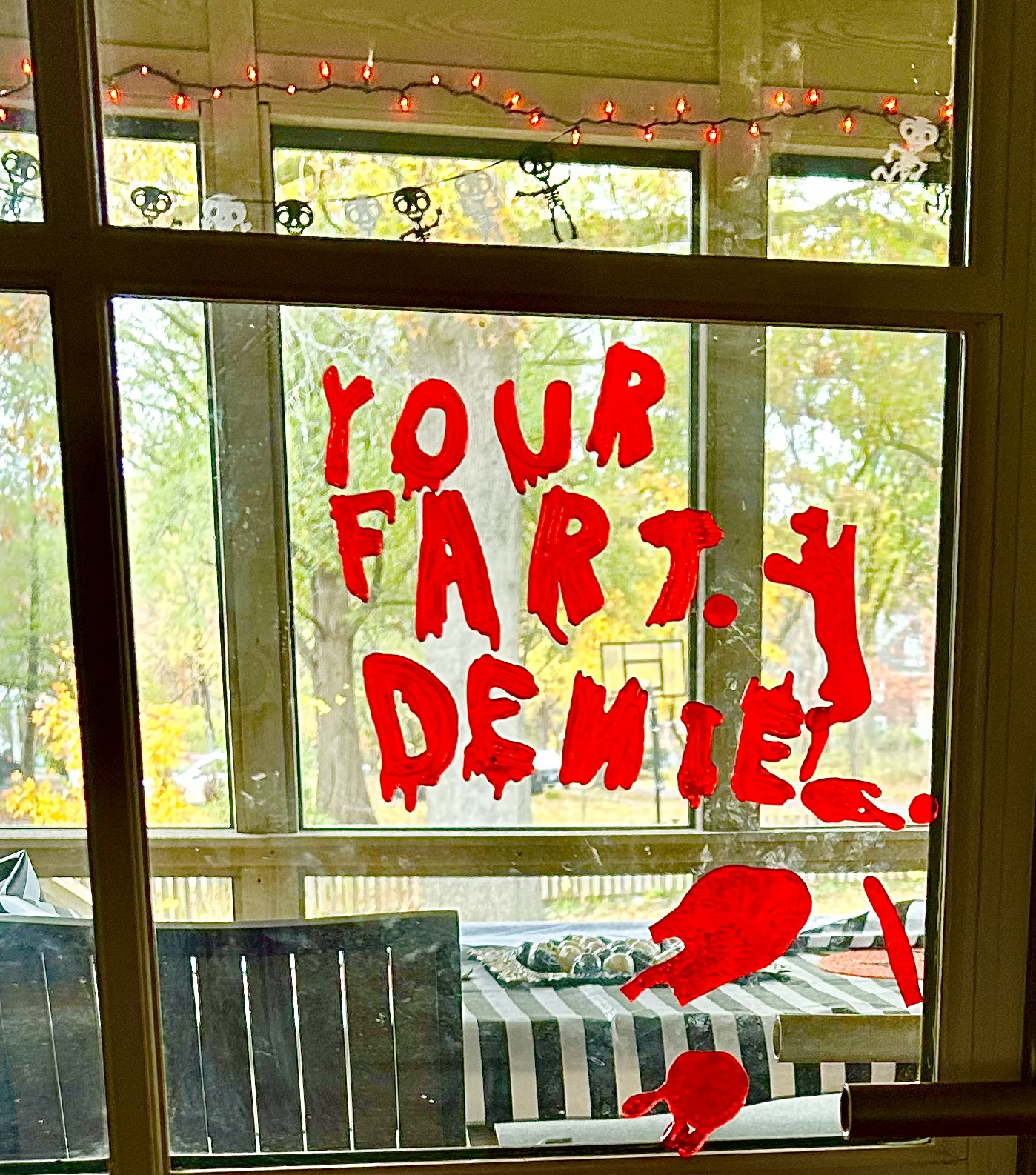
YOUR FART DENIED
A young visitor to my house on Halloween used our sticky “blood” letters to spell out this message on our porch door. Knowing that I can’t ask him what his intent was in crafting this message, and aware of the intentional fallacy, I choose to interpret it as a comment on the election. It says, to the clever Republican politicians who know better and the idiots who don’t, to the liars of the alternate reality universe, to the spineless and/or craven oligarchs, and to the saps who have fallen for the Man Who Will Say What We Were Thinking But Wouldn’t Say in Public, thinking he gives a shit about them: we won’t let you put him in office again. That’s what I think it says. Say it with me.
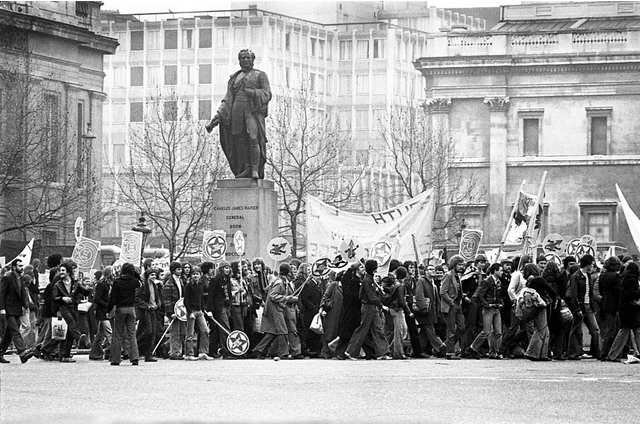
In April 1978, at the Rock Against Racism concert in Victoria Park, The Clash played their song “English Civil War” live for the first time. The organization Rock Against Racism, formed in 1976 in reaction to racist incidents and the rise of the National Front in the UK as well as to racist statements by Eric Clapton and David Bowie, staged two national carnivals in 1978, the first in Victoria Park in East London, where The Clash played with Steel Pulse, a reggae band from Birmingham, and a few other punk bands.
“English Civil War” is set to the tune of “When Johnny Comes Marching Home,” the American Civil War ballad, and also borrows its first line. The song uses this inspiration to imagine the war it fears is, as Joe Strummer said in an interview shortly after the song’s first performance, “right around the corner.” I thought of the song yesterday, after watching clips from Trump’s Madison Square Garden rally the night before, and played it couple of times. I’m playing it right now.
The line that made me think of this song yesterday: “Your face was blue in the light of the screen/As we watched the speech of an animal scream.” As has been the case for nine years, I’m angry at Trump and his mob’s racist, hateful rhetoric almost as much as I am at what he’s done in office, at what he’s inspired in others in other offices, and at what he threatens to do if he gets into the White House again. I’m angry at this rhetoric not only because of the immediate effects on its objects and the potential acts of violence it can inspire but because of the long-term effects on us. Our faces are lit by our screens a thousand times more than they were in 1978, everywhere we go, walking and driving and laying in bed; these days, we get to hear animal screams like we heard a couple of nights ago everywhere and all the time. If you’re the immediate object of the hatred, of the racist attacks on your intelligence and humanity, the hurt must go very deep. If you’re not but don’t agree with what they yell and don’t want to live in a world where it’s okay to yell those things, that’s another kind of hurt, also profound. But what if you don’t know to be hurt, don’t know that it’s not okay to yell those things? What if you’ve grown up in the last nine years hearing them? What if you’ve seen people cheering them on and repeating them?
What I didn’t remember until I listened again to “English Civil War” is how the song ends:
When Johnny comes marching home again Nobody understands it can happen again The sun is shining and the kids are shouting loud But you gotta know it’s shining through a crack in the cloud And the shadows keep on falling when Johnny comes marching home
The balancing of hope and fear in these lines capture what all the young punks (to quote a different song) involved in Rock Against Racism must have been feeling almost fifty years ago as they heard the boots of the National Front crunching around the corner and the spittle-flecked slurs fly from Eric Clapton’s lips. They hoped that calling it all out, together, shouting loud, would have some effect, but at the same time they feared that it wouldn’t be enough, that the sun squeezing through the crack in the clouds would lose out to the falling, looming shadows. That it could happen again.
Fifty years later and a week out from election day, millions of Americans know the feeling. But millions of us don’t–they’re cheering on the animal scream. And fifty years from now, the kids whose faces were blue from the light of the screens showing them these rallies, these speeches, this hate: what about them?
& & &
“English Civil War” was released as a single in February 1979. The b-side was a cover of the Toots and the Maytals song, “Pressure Drop.” The Clash had already covered a Junior Murvin song, “Police and Thieves,” on their first album, demonstrating their affinity for reggae music and for its incorporation of political sentiment (though it may not have always been appreciated– Murvin’s initial response to the cover was reportedly “They have destroyed Jah work!”). Toots Hibbert has said that “Pressure Drop” is a song about karma, about bad things happening to people who do bad things to innocent people–“pressure’s going to drop on you”–and that he wrote it after he had been innocently imprisoned. It may be a revenge song, but it’s not about violence, at least not explicitly; instead, it’s about the knowledge coming to the malefactor–“I say when it drops, oh you gonna feel it/Know that you were doing wrong.”
So I’ll end my early evening in the office listening to this song instead. It’s not a happy song, exactly, though it’s less unhappy than “English Civil War.” But the hope that people doing wrong will know that they were doing it, someday–or at least and maybe even better, that the millions watching will know, someday, that what they heard those people saying and saw them doing were wrong–is not nothing.
For the last nine years, people have been saying what’s been known about our last president since he was in second grade and gave his music teacher a black eye (or lied later to his ghostwriter about having done so, I don’t know which is worse, but either way he was a confirmed menace): he has the instincts of a bully. He conducts himself like one in his business career and personal life and, when he had the chance, tried to run the country like one.
“Bully” is not exactly “fascist,” but it’s not really far off: a fascist is a bully the people of a country foolishly allow to be in charge of it. For the last nine years some very educated people have argued that he’s not one. Now that there is no more quiet part, he’s straight out telling us he is. And the other objection–not that he doesn’t have fascist instincts but that he’s just inept–never held water, and really won’t now. Last time, there were people around him to stop him from doing the worst. Because we’ve allowed him to run again and because the court he built has taken away the legal guardrails, if he wins, by hook or more likely by crook (nobody actually knows the origin of that phrase, so I can use it however I want), he will be able to do what he’s always wanted, for his rich friends and to everyone else. And millions of us will cheer him on until we feel the boot on our necks too rather than just on those of the neighbors we’d mocked and hated along with him.
And if he doesn’t win the election–and the institutions stand and our nerve holds so that he can’t steal it–we have to do everything we can to change things so we never find ourselves here again. We have to figure out how to show ourselves what he is and what we’re cheering for. And we have to build new and better guardrails. We’re close enough to it happening here to know, finally, that it can.
Excerpts from two emails that landed in my inbox yesterday:
The first is from an email helpfully sent to me by McGraw Hill GO, which as the name shouts, is raring to GO to sell me a product that will help me teach, ostensibly. I mean look!
It’s an eBook+! It lives within my LMS! It makes it easier to keep up with student progress and direct attention where it matters most, which is apparently somewhere other than whether my students are learning! I guess I should be grateful for that assurance of knowing my students are completing the reading, but instead I’m checking to see if I still have my wallet. Can I drive this eBook+ off the lot right now?
It’s the AI that I should apparently be most grateful for, though. The embedded generative AI learning tool, I am told, will create a more flexible learning environment! And that environment will drive meaningful engagements! It will also drive a deeper conceptual understanding, as opposed to some other kind of understanding, of my course content! So much driving! So much cause and effect! Instead of the hard and messy work of trying to help my students understand the things they read, the world around them, and themselves and their place in it, all I have to do is sit back and let GO drive. Whew. What a relief.
The second email comes from the Teaching for Learning (?) Center at my employer, This University in Canada, You’ve Never Heard of It. A featured speaker at an upcoming event will be the AI expert whose identity I have tried to disguise for some reason. This person will be coming to This University (TU, go fight win) to share with us the Good News of AI, sharing the εὐαγγέλιον, the gospel, that artificial intelligence has risen and will be our salvation. Do you believe in the Good News? It believes in you!
It’s the end of a long and cranky week, so forgive me the sarcasm. I’m not here to impugn motives of publishers, staff, or administrators or to criticize fellow instructors for wanting a break from the difficult work of teaching. I’m sensitive to the privilege I am lucky to enjoy of working at a research-intensive university, where, if I want, on a Friday afternoon during under-attended office hours, I can take a half hour and blog my thoughts into the abyss, and I’m sensitive to the four-four or more load of many instructors, for whom in my textbooks I have selected readings (and written apparatus supporting them) in order to lessen that load.
My first ever AI generated images (prompt: “teacher being buried by papers”)
What I’m doing here with this spare half hour is saying that these claims of AI’s salvific power makes me feel like I’m being sold a bill of goods. The educational publishing company is in the business of selling things to help educators, and can hardly be faulted. It’s what it does. It has to keep swimming or it dies, or something. The whole world of ed tech (ET, by decree and henceforth) is in the same business. TU and by extension higher education are most emphatically not in the same business as EdTechpreneurs, and should not be the gullible rubes who snap up its latest products. Universities have been busy establishing a sorry track record of diving headfirst into the latest ET innovations–remember MOOCs?–and moving on from them once their promise went unrealized, leaving behind a trail littered with spent money and damaged morale.
I don’t want to overstate. I wouldn’t be so rash as to condemn everything about LMSes (how do you pluralize an acronym that ends in S? Why are my office hours today so quiet? Does it have anything to do with it being homecoming weekend?). As we learned during the pandemic, they make some things easier. But they can’t be used to replace us.
Thanks, Google™
There is considerable pressure on higher ed administrators to cut costs, and as anybody who’s looked at university finances knows, one of the only places they can cut is instructor pay and benefits. It’s why you see departments shrinking as retired tenured faculty go unreplaced; it’s why you see whole departments razed if administrators can’t wait patiently for faculty to die off or at least go away. Contingent laborers cost less. ET promises lower costs. Humanities instruction, at least, what I do, is labor intensive. Human labor intensive. Humanities departments are forever being berated for the high costs of small classes (discussions which seem never to touch on the rarely mentioned high overhead incurred by the research grants given the big-lecture-teaching faculty in other disciplines, but that’s another discussion). The value of what we do lies in helping students learn to think, creatively and critically. We want to help them learn to be able to process large amounts of complicated information, to grapple with sophisticated concepts, to know when they’re being sold a bill of goods.
Thanks, Canva™
I don’t want resource-gobbling AI to transform the images in my head. I want to do it myself because part of the reward of creative thought and expression lies in the doing of it. I want my students to learn this. I don’t want TU or any other institution of higher learning to try to save money by outsourcing the work of education; in the end it will waste both the money it spends and the opportunity for students to learn to want to come up with interpretations, solutions, expressions. I got my first AI generated assignment this week. I read it. I knew instantly where it came from, and it was confirmed by an abashed student, and it sucked. It didn’t know anything, and it didn’t think anything, and it didn’t express anything.
My office hours are over. Monday morning I’ll come back to campus. At noon, my students and I will discuss the upsetting ending of Toni Morrison’s upsetting and beautiful novel The Bluest Eye, and we will talk about the history of it being banned around the country and in the town some of them come from by people who don’t value the kind of education that involves reading upsetting and beautiful things, and we will probably also talk about homecoming weekend and think about what universities are for, which I am always trying to get them to do because the whole point is to get them to look around and think about where they are, whether “there” is their classroom or university or state or country or planet. (They will also get good paying jobs because they know how to read and think and express their thoughts but can we please not let that be the only reason we do this?) I will try to drive meaningful engagements, if you want to put it that way, and appreciate the opportunity I have been given to do this important work the way I think most effective. Also I use much less water.
Today I taught my first class of the new school year. It was the first meeting of my course on book banning in America, and, as I learned when I asked them to go around the room and introduce themselves by saying where they were from and what their major was, what their favorite book is, students are taking the class for various reasons: because they liked the topic, because they needed to fulfill a distribution requirement, because they were in my class last semester and didn’t hate me I guess.
I had a great time.
Of course this is not the most important thing about a class meeting. It might be the least important thing, though I think many of us teach better when we’re enjoying ourselves. But it felt good to be in a room with thirty students on the first day of a semester, introducing what we’ll be working on for the next fifteen weeks. We came together, for fifty minutes, to earn distribution credits and for other reasons, starting to get to know each other a little and to think together about the history of attempts by Americans to keep other Americans from reading books they decided they shouldn’t get to read. It felt like possibility, as it has the first day of every semester I’ve taught for thirty years (!). And the way the summer’s gone, nationally, possibility feels especially good to me right now.
Tonight I’m sitting in front of the TV watching the Democratic National Convention. It’s easy to be cynical about conventions–there’s no more theatrical political theater–but so far this one is pretty inspiring. UAW President Shawn Fain followed Warriors coach Steve Kerr. A smart producer cut from Alexandria Ocasio Cortez delivering a fiery speech to a shot of Jesse Jackson listening and looking impressed. I’m feeling demographically targeted. I’m also feeling something like what I felt this morning. A convention is a coming together, etymologically. And it’s about possibility, about what the people coming together can make happen. And this particular convention comes at a time when that possibility feels pretty precious.
Wednesday, when class meets again, we’ll be talking about the long history of book banning in the world and the shorter but very busy history of book banning in the US. One event I’ll bring to the discussion is the banning of Thomas Morton’s 1637 New English Canaan. Morton came to Massachusetts in 1624 with the Puritans to Plymouth Colony, established an offshoot community that traded with Native Americans, and got exiled for it. New English Canaan is a celebration of the culture of the natives and a criticism of their treatment at the hands of the Puritans. So they banned it, making it likely the first book explicitly banned in what is now the United States. Importantly for our purposes in the course, the banning was motivated by fear—fear of loss of business from Plymouth to the natives, and fear of the natives themselves, with whom Governor William Bradford saw Morton’s people “dancing and frisking together,” something not even allowed among themselves. By the time we get to contemporary efforts to keep books away from children, we’ll draw the parallels to the motivating fear of difference–of Black people, queer people, people who don’t conform, who resist–behind those efforts.
As with the topic of my course, there’s a long history behind what’s happening this week in Chicago. It’s not always pretty, that history, not the part that began before the Puritans and not the part that began when Barack Obama made a joke that Donald Trump didn’t like. When things have improved over the course of that history, it’s been because people came together to work toward the possibility of treating others, however defined, better.
Jasmine Crockett, a former public defender and Democratic representative from Texas, is speaking now. Again, it’s easy to be cynical, but come on. Maybe we’re coming together. Maybe it’s working.
So I was playing pickleball this morning here in sunny Columbia, MO and thought a guy playing on the other court was Lucas Kunce. Lucas Kunce is running for US Senate against one of the top five worst men in the world, Josh Hawley, and seems like a decent guy. He’s from Jefferson City, a half hour south. I stood next to him once at a fundraiser while he talked to my wife about gun policy. His policy positions jibe with my preferences and values and with reality. Most important, he’s not Josh Hawley, but so is the ham sandwich I would vote for before Hawley.
Sen. Josh Hawley (R-MO) speaking at NatCon: ⁰⁰"Some will say now that I am calling America a Christian nation. So I am. And some will say that I am advocating Christian nationalism. And so I do." pic.twitter.com/ja09ThFlyM
— Heartland Signal (@HeartlandSignal) July 9, 2024
At any rate, it wasn’t Lucas Kunce. I knew it couldn’t be him because what would he be doing playing pickleball on a Sunday morning in the heat of campaign season and he didn’t seem tall enough. Then when he and the man he was playing with needed people and I was sitting out over at my game, I went over and played with him and confirmed that he really wasn’t Lucas Kunce, and told him that from a distance he kind of looked like he was. His response was to say no and say he just moved here and to ask if that’s how people pronounce Kunce.
I hope it was.
I tell this fairly boring story because I was excited to meet Lucas Kunce, which means I was excited to meet someone running for national office from Missouri, which means I think that I must believe he has a chance to win. Polls says he does, and while I don’t trust polls much, I do believe that he’s an appealing candidate (even John Goodman says so) who’s got good comms people and some fight in him and that Trump’s increasing inability to not seem like an unbalanced malignant narcissist will prove to be a down-ballot drag and that Missouri has never been as red as it’s recently seemed, gerrymandering and all. Like Trump, Hawley has the ability to convince the current GOP base that he’s on their side, but the rest of Missouri might not be buying what he’s selling.
If you’re not from here, or from another red state, you might not understand how remarkable it feels to be excited to meet a candidate for national office from your state who might actually win. If you haven’t endured years of being represented by people who believe that all you need for a good political ad (other than bigotry and xenophobia) is blowing things up, or shooting them, or lighting them on fire, you might not sense the weight of this moment for us.
I want to see a debate among the 21 Missouri Republican Senate candidates. It would work like the Hunger Games, where Eric Greitens brings his gun, Eric Schmitt brings his flamethrower, etc. Now THAT would be a debate worth watching! pic.twitter.com/TlpMAEgJzn
— Democracy on the Move (@allonthemove) July 7, 2022
This morning’s non-encounter brought the moment home to me. Sure, I’m filled with dread like always, as the GOP isn’t even trying to hide their attempts at ratfuckery, but the sinking feeling of just a month ago, when Biden had not yet stepped down from the campaign, is gone, and now I have to admit that to myself, and not just in terms of the presidential election. If Missourians give money and knock doors and turn out, we could have people in office from our state who give a shit about it for a change. Democrats from Missouri for a long time had to be careful not to stray too far left, and recently that’s not been enough. But it’s possible that neither is the case any more; a certain kind of left populism seems to be having a moment and the momentum driven by defense of abortion rights may finally prove too much for the Gerrymandering Old Party, here and across the country, meaning Democrats can be Democrats here and win.
Missouri voters will decide in November whether to guarantee a right to abortion with a constitutional amendment that would reverse the state’s near-total ban on the procedure. https://t.co/IqyLVl3Vff