It’s also the day that saw Donald Trump attack his political opponents at the National Prayer Breakfast and give a bizarre, despair-inducing speech in the East Wing of the White House. In case you missed it, he called his opponents, including leaders of the Federal Bureau of Investigation and the House of Representatives and a sitting Senator, “scum” and “sleazebags” and whined about how poorly he had been treated. He invited the audience to stand up and testify to his greatness. Some day we’ll learn the pharmacological details. It’s also the day we learned that the Attorney General now has the right to approve any investigations into anyone running for office. And we heard that the debunked conspiracy theory Trump tried to bribe Ukraine’s president to legitimate–an effort the Senate just yesterday acquitted him of being thrown out of office for–was being pursued for investigation by his supporters. It’s the day, then, that we learned that despite the efforts of good women and men to save us, it’s entirely possible that this administration could continue for another four years. At least.
It’s been enough to make me feel like maybe we’ve lost.
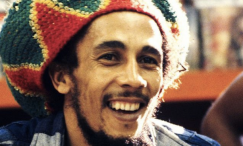
Bob Marley and Donald Trump don’t belong in the same universe, much less the same post. I hate even thinking of them on the same day. But around 3 or 4 this afternoon, after spending so much time on Twitter being angry and appalled that someone I know only on Twitter told me nicely to go outside, I remembered something. I wrote some encyclopedia entries when I was in grad school to supplement my teaching, and in reading for one I wrote on Bob Marley, I learned something he said after an attempt was made on his life. The attack happened two days before a free unity concert organized by Jamaica’s prime minister, and it was thought to be intended to keep him from appearing at the concert. Injured, Marley played anyway. When asked why, he said, “The people who are trying to make this world worse aren’t taking a day off. How can I?”
To borrow another line of Marley’s, from his “So Much Things to Say,” “Remember that, when the rain fall/ It don’t fall on one man’s housetop.” It’s raining. The people who are trying to make the world worse are busy. No days off.
I just watched the president* deliver his statement about the recent exchange of hostilities between Iran and the US while taxiing on an O’Hare runway on the way to the annual meeting of the Modern Language Association. It was something. Now I’m in the air and I can’t stop seeing it play over in my head. During my layover, I had been preoccupied with the conference–a panelist on the roundtables I organized had to pull out at the last second, I still have to figure out who I’m going to be talking to for the book series I edit, I don’t know how I’m supposed to stay awake for 9 p.m. dinners at my advanced age. But this press conference pulled me back into the whirlpool of war worry I’d briefly avoided (skirting that Charybdis for the Scylla of conference scheduling?). It also made me really, really angry.
It wasn’t just that the man enough people somehow thought was qualified to lead the country was so alarmingly out of it, even more unable to read a teleprompter (let alone to breathe) than usual. It wasn’t just that he seemed like he might have accidentally revealed classified intelligence about new weapons (which I somehow misheard as semisonic rather than hypersonic, reminding me of one of my all-time least favorite songs). More than anything, it was the dig about the missiles used in Iran’s attack being paid for by the previous administration that stuck in my craw.
AKA the craw
It stuck in my craw because there are times that it seems that the most important of all the things that make the president* so bad at his job and so bad for the country isn’t his greed, power-hunger, venality, or ignorance, it’s his joyful divisiveness. He’s a divider, not a uniter. The jab at his predecessor in today’s statement is of a piece with everything we know about him from his past as inheritor of his father’s racist renting practices, as rabid accuser of the Central Park Five, as birther, from his campaign’s being built on xenophobia, Islamophobia, and the culture war divides that split this country., and from his behavior as president.
I’m not so naive that I don’t know the US has a long and very distinguished career of division, from its displacements of the many natives who were here before to the deportation of the many we should be welcoming today. The 1619 Project’s partly rhetorical move to install 1619 alongside 1776 is nothing if not a reminder of that. But it also has a long history of being better, or trying to be–alongside the history of institutions, conflicts, and policies built on supremacy, on America First and fuck everybody else (including Americans some in power would rather not count as Americans), there is a history of people working against those things. And there are millions of people like me who are hungry for leaders (and voters) who want to be part of that second history, who believe in the old cliches about a national project in which we are united. (I think it’s one of the reasons so many are wary of the primary’s moments of tensions, in addition to the more practical immediate concerns of what it will mean come the general.)
Unfortunately, the president* isn’t one of those people. In a moment when much of the nation he was elected to serve and the larger world was scared shitless at what might happen next, he could have–as most presidents before him would–reassured us. Instead, he rattled his saber, bragged about the size of his guns, ignored the effects on the people who live outside our borders just like he ignores so many within them, and, because he just couldn’t resist, blamed the whole thing on the man who made fun of him one night at a comedy fundraiser. It went by so fast you could almost miss it. If you did, here’s what he said: “The missiles fired last night at us and our allies were paid for with the funds made available by the last administration.” Never mind that (as he’s been reminded countless times when returning to the subject of this money) it wasn’t a gift, or that there’s no evidence whatever that that money paid for those missiles: the point is to insinuate that the Democrats are on the bad guys’ side.
Two days ago Nikki Haley made a similar move. After our armed forces, without any consultation within our government or with whatever allies we might still have, killed a military leader of another country, some wondered whether it had been a good idea. Many national Democratic figures condemned the attack, but not because they thought the victim was a swell guy. Following the same playbook as her president and working toward the same blatantly political end, she said the people running the opposition party and the people running to oppose the president* in the next election were “mourning” his death. See, it’s not just that people disagree with the president: they’re the enemy, they’re not real Americans, they’re evil. It’s from the same playbook out of which Trump pulled his Let’s make Jewishness a nationality move a month ago, and it’s angering for the same reason. The only people who really matter are Trumps. White Christians are the other real Americans, his actions and words say, so he’ll look out for them a little while slipping their wallets out of their pockets as he gives them a manly clap on the shoulder. Everybody else is suspect. The people getting the shoulder claps are happy to hear it, because they think they’re part of the us and not the them. Somehow this shyster and his party of shysters has fooled them into believing it.
I’m somewhere over the Northern plains right now, somebody I don’t know is asleep on my shoulder, there’s a kid two rows up crying in stereo with the kid two rows behind me, and I’m so lonesome I could cry, because that’s how the president* wants me to feel. We all need to be looking over our shoulders at each other, statements like this morning’s tell us, because we’re not in this together. If we can’t stay here, as the song goes, where are we supposed to go home to. If the American project is shuttering its doors, what the hell happens next?
Donald Trump will sign an executive order tomorrow making Judaism a nationality rather than a religion. In doing this, he will make it possible for the federal government to withhold funding from universities who allow the BDS movement to be represented on their campuses. If this seems like a non sequitur, to supporters it’s not: if Jews are a nationality and not a religion, the argument goes, they can be protected under civil rights legislation, and since these supporters believe or at least argue that criticizing Israel’s policy toward the people living in its occupied territories is anti-Semitic, then that criticism becomes a violation of civil rights and so punishable by the withdrawal of federal funding to the institutions that allow that criticism to happen.
The New York Times headline–“Trump to Sign Order Targeting Anti-Semitism on College Campuses”–elides the leap the administration is taking in this order. With the stroke of a fat black Sharpie, Trump will, as if by magic, make individual Jews not coreligionists but members of the same nationality. The magic is that this is of course not the case–it ignores the diaspora of a couple of thousand years or so ago, some of it voluntary, some not so much. And it ignores the fate of the Jews since then, so often seen and treated as less than citizens, or natives, or sons and daughters of the countries in which they lived.
Copy of relief panel from the Arch of Titus in the Nahum Goldmann Museum of the Jewish People, depicting the triumphal parade of Roman soldiers leading newly enslaved Jews, while displaying spoils of the siege of Jerusalem.
I’m an American Jew. I was born and raised in New Jersey. I live in Missouri. My family tree has roots in Eastern and Western Europe, mostly the Eastern Europe whose national borders shifted and collapsed around them. It doesn’t have roots in Israel or some other imagined or historical nation. It has a branch in Israel–my aunt and uncle and two cousins made aliyah, or moved to Israel from the diaspora, in this case from New Jersey, in the early 1970s. I don’t support the occupation of the territories and I didn’t support BDS when it came before the delegate assembly of the Modern Language Association, my professional organization, for academic freedom reasons. It’s a complicated issue for me, as it is for many American Jews, and not because we’re anti-Semitic or, as they used to say more often back in the day, self-hating Jews. I’m an atheist and I love my mother’s brisket and a few weeks ago I introduced an undergraduate I took to a conference in Chicago to matzah brei and he was underwhelmed, as was I. These things are complicated.
There’s a lot to be said about the academic freedom question, as there is about so much of this. But I’m tired. I’m tired of feeling every day like the fate of the only country I’ve ever lived in–a country that has a horrific historical track record but that I’m naive enough to believe can do better–hangs on the fate of an ignorant hate-filled grifter. I’m tired of seeing the way Trump and the people he keeps around him treat people who have been feeling their entire lives what I’m feeling today–like I’m not at home. I’m just fucking tired.
In his 2004 novel The Plot Against America, Philip Roth imagines what might have happened if anti-Semitism had gotten a foothold in the White House in the 1940s. He imagines an Office of American Absorption, which creates a program, called Just Folks, that sends Jewish boys to live with Christian families in the Midwest and South in order to Americanize them because, even though they were born in the US, their religion meant they weren’t real Americans. I don’t care if Trump and Jared Kushner, the ostensible mastermind behind this plan, think they’re doing the right thing or have convinced themselves that there’s a reason other than naked self-interest that’s motivating them. They’re not doing the right thing by campuses, by American Jews, or by America. They’re not doing the right thing by me or by any of the other people who were born here or came here to find a new home. We don’t need them telling us who we are. We’re Americans, which is a complicated thing to be these days, more for some of us than others, more recently for some of us than others, but it’s who we are, and we’re tired of this shit.
Last week I spent a couple of days in Columbia’s Rare Book and Manuscripts Library, flipping feverishly through the papers of the Association of University Presses for the book on the history of American university presses I’m working on. I’ve finally finished cataloging my pictures and have begun going back through them and trying to get down all of the thoughts I had about them mid-flip. A lot of what I found interesting was about the origins of the AUP. (Here ends any useful reference to Derrida’s book on the origins of psychoanalysis, alluded to in this post’s title.)
I want to know more about the formation and early stages of the AUP (formerly the AAUP, until 2017, when the constant confusion with the American Association of University Presses apparently became too much to bear) not just because every story needs a good beginning but because the formation of the association happens at the time that university press publishing in the US is starting to come into its own, to see itself as an industry, albeit one forever tied to the individual campuses where presses live and to the scholars they serve. At moments like these, the tensions that animate institutional histories are made visible.
Take this description, from writer Christopher Morley’s preface to the first joint catalogue (titled Shelfward Ho!), issued before the association was formed, of the motivation for this new project: “Thirteen university presses, pooling their interests, have here listed sixty-five of their most exciting recent issues and and set out for a serious invasion into Bœotia.” Framing a catalogue designed to get scholarly books before a wider audience as an attempt to invade Bœotia–the region of Greece that ancient Athenians used as shorthand for ignorance and dullness–is of course meant to be funny, but it is also potentially telling, at least as concerns the way university presses saw their place in the world.
Also telling is the consistent early jokiness seen in the self-references made by Chicago’s Donald Bean and other representatives of the future members of the AUP. Calling themselves “producers of highbrow tobaccos” and “bootleggers,” even producing a pamphlet for a 1932 meeting arguing for greater coordination among themselves and with commercial publishers called “The Story of Pure Tobacco,” seems evidence of an anxiety about their position, though whether it was about being businessmen with such an unpromising product, disseminators of scholarship working in the unscholarly world of commerce, or some combination of both, I’m not yet sure.
It certainly seems connected to the tensions between the book business and the business of scholarship that persisted through the twentieth century and today. When press subsidies are cut, when presses are threatened, when traditional monographs seem impossible to publish given pressures on presses to be self-
sustaining–whenever the question of what university presses are for and how should what they do be paid for–the old tensions embodied in “The Story of Pure Tobacco” are in play. The same is true when you look at the persistent lure of the crossover book, the title accessible and welcoming enough to Bœotians that they might shell out enough drachmai to support the publication of the light-selling scholarly monographs; the invasion into Bœotia is an attractive prospect, but it costs money to mount that kind of invasion, and it doesn’t always pay off. Likewise, the university press’s part in the ongoing contest over the value of the humanities has roots in these origins: beyond the esoteric knowledge produced for knowledge’s sake in the book-centric humanities disciplines, the argument over whether they have something to offer to the Bœotias surrounding the college towns and university-rich cities has become part of the argument for continuing to support them or for continuing to support them less and less.
Origin stories are funny things; you can sift through the past and find the parts of the story you want to tell. As I sift, I’m coming across evidence of ingenuity as well as of old boy chumminess, of a cooperative spirit against a landscape of haves and have nots, of the amount of time it took to do anything before email, and I don’t want to leave any of this out. I want to end up telling a complicated story about the history of university presses, one that does justice to the many different possible stories, the failures and the successes, the bleak crises and rosy futures, and in doing so to make my own argument for the value of the whole enterprise, in the form of a university press book.
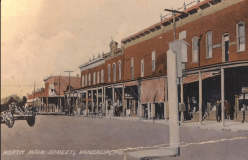
I’m revising a talk I’m giving on Missouri writers at the Vandalia Area Historical Society this weekend in between games at my son’s soccer tournament and thinking about the topic that serves as the title of the talk and this post. As I think I am just congenitally wired to do, my thoughts in the talk focus on dark aspects of the state’s history, and on their persistence, but manage to find hope in the way people have confronted them. I’ve given a few talks like this in order to help me think about these things and to get out into the state whose history and writers I’m supposed to be preparing myself to teach about (and in some small way to help publicize the minor in Missouri Studies I’m directing, which got a nice write-up in one of the local papers a few weeks ago).
I’ve felt especially unsettled while working on the talk this time, and I think the reason is captured in the title too. To break some shattering news, the state of the union these days is not strong. Of course everyone who reads a newspaper and is honest with themselves knows this, and I don’t know what to say about the rest other than that I hope their children have good teachers, but I think knowing it and thinking about it are only one of they ways we experience the state of the union. Moving in the past few weeks from the low-grade anxiety engendered by having a man like our current president* at the helm to the the full-blown despair and rage (and no, those words are absolutely not too strong) brought on by recent events and revelations, I’m reminded that people experience the state of the union not only in our brains and our hearts but in our bodies. The refusal to confront the truth by the overwhelming majority of the party in power, the cruelty that again and again seems to be the point, the lack of regard for the impact on everyday lives of the policies being vomited out of Washington–we can feel this in our bones. (And I’m very much aware of the luxury of experiencing this presidency as a white man and citizen and all the other things that make the threat a good deal less existential. But still.)
As I’m preparing to go talk to strangers about the history of a state that’s much more theirs than mine, I’m also anticipating feeling out of place. Given the way the president* and his shameful defenders–offenders–talk about the divide between the regular, real Americans they pretend to champion and the elites they pretend to defend them against, given the mistrust that talk breeds and reinforces, I’ll be opening with a joke about how growing up in New Jersey makes me an obvious expert on Missouri, but it’s a joke that hides (or maybe doesn’t hide) real anxiety. And it’s an anxiety made worse by the state of the union. I don’t imagine whatever red hatters roam the Vandalia area will be hanging out at the Historical Society this weekend, but I do think that those of us who are hatless have the feeling that they’re living inside our heads, and at times are making us see the world through their eyes.
I gave a talk in August at the St. Louis Public Library into which I worked some of what I know about the history of race in St. Louis from the first state constitution to freedom suits to redlining to Ferguson, and the Q & A after devolved into a lamenting of how the adult children of many in the audience had moved away because of some of the negatives highlighted in my talk. I say devolved because, as I said, I can’t help but lean toward the future and the positive. Like many of the writers I talk about, as much as I explore the wrongs of the past, I want to be hopeful, to imagine a future in which people repeat past mistakes slightly less often. Many in my profession find this kind of attitude naive, arguing that history doesn’t work like that, objecting to observations about current events like This is not who we are and We’re better than this, by saying instead Yes, its exactly who we are, and We are not anything other than this.
I have to believe that it’s who we have been but it’s not who we are. I have to believe that “we” is always expanding and becoming more diverse, despite constant pressure and occasional spasms of contraction. I have to believe that the current victory of those who would keep “we” small, who would stoke resentment, isn’t permanent. It’s not an aberration either, as has been recently said. It’s got a long history. But there’s also a long history of resistance. As I drive this weekend from a multimillion-dollar astroturf soccer complex in St. Louis County to Vandalia, pop. 3899, thirty miles southwest from Mark Twain’s Hannibal, ninety-five miles northwest of Michael Brown’s Ferguson, I’ll be thinking about that.
Got the news today (oh boy) that a roundtable proposal I put together for January’s Modern Language Association meeting has been accepted by the Program Committee. It will be one of the MLA’s new “Just-in-Time” panels covering late-breaking events that broke too late for sessions about them to make the usual submission deadline, and is called “Just in Time: The University Press and the University.”
The roundtable’s topic will be the relationship between university presses and their parent institutions, in light of recent events and focusing in particular on what happens when funding arrangements become unstable. Participants will include press directors Nicole Mitchell of U of Washington P, Gianna Mosser of Vanderbilt UP, and Stephanie Williams of Ohio UP; editorial directors Greg Britton of the Johns Hopkins UP and Alan Thomas of U of Chicago P; and professor and series editor Loren Glass of U of Iowa. I imagine the talk will range far and wide, from current events to the impacts on the health of individual presses to the fate of areas of intellectual inquiry and the tenure and promotion system itself.
One thing that may come up if this presider has anything to say about it, and he may not, is what’s at the bottom of the scarcity of funding for worthwhile ventures such as university presses. I’ll let David Leonhardt say it for me:
Watch how radically taxes on the wealthy have fallen over the past 70 years:
Last week I got a little more talking to people in before I settle down to a long stretch of writing, which involves more talking to myself than to people, though I guess I am technically a person. (I gave a talk on rock music and revolution at the Kinder Institute on Constitutional Democracy/Missouri Humanities Council-sponsored Missouri Summer Teachers Academy and I gave a talk on William Wells Brown, Mark Twain, the Missouri Constitution’s Exclusion Clause, and the long arc of Missouri’s history concerning race at the Henry County Museum, as part of the Missouri Humanities Council/State Historical Society of Missouri speakers bureau series, Show Me Missouri). I wanted to mention these talks briefly here because I’ve started trying to so some of this kind of thing, and I think it’s worth putting down a few words about why.
People are arguing a fair amount these days about the fate of the humanities in the face of shrinking enrollments (the subject of a workshop I helped moderate at an Association of Departments of English Summer Seminar a couple of weeks ago with Lori Askeland). Some say the trend can be reversed by our getting out in public and demonstrating the usefulness of what we do. Others say that we are at the mercy of demographic trends and cultural shifts that we can do little to stem (as it were), with some going so far as to say that the shift away from the study of our subjects aren’t even necessarily bad in the long run. (An example.)
I don’t know who’s right. I’m not as skeptical as some of my colleagues about the value of the study of literature. I understand that we should separate our concerns about the dip in the number of majors and the practical ramifications of that dip from the question of the value of the disciplines themselves. I do think that there’s a favoring of science and technology in upper administration and state houses that reflects larger cultural trends I’m unable to see as positive. And I do believe that it can’t hurt for the people who vote for the people who make the laws (and the budgets) to see us doing what we do (and, in the case of my university, to not think of us as the place where the protests happen). So I talked to some high school teachers who came to my campus and I talked to some people a couple of hours away from my campus and who knows if it was worth all the preparing and the driving and maybe I’m kidding myself.
On the other hand, maybe there could be value to talking with people who aren’t students or other professors about the connections between a punk band’s embrace of international sounds and their skepticism about Cold War adventurism, or about the connections between the work of some long-dead writers from their home state and the way that state entered the union. It’s possible that the value might lie in my providing new information or a new way of seeing something. It’s possible that it might lie in giving someone a nudge in the direction of greater support of universities generally or the humanities in particular. Or the value might just be that it gives me the chance to drive on roads I don’t usually see, to towns I don’t know, filled with humans I’ve never met. The Vandalia Area Historical Society wants me to come talk to them about Missouri Writers, and I’ve only been through there once or twice, and never at slower than twenty-five miles per hour, so I’m going. See you soon, Vandalians.
I found out recently that next academic year I’ll be chair of the Modern Language Association’s Committee on Academic Freedom and Professional Rights and Responsibilities. We had our last Skype meeting of the year the other day, and talked about the things we usually talk about, which amount to different ways we’re trying to help the MLA help people working in modern language departments. In addition to reminding me how weird Skype (technically, Zoom) meetings can be, like when you knock your chair against your desk and the mic picks it up and all of the sudden it’s your backlit head filling everybody’s screen as if you had a point to make when you might only be thinking about lunch, say, the meeting also led me to think about associations like the MLA.
Video telephony predicted to be in use by the year 2000, as envisioned in 1910
That meeting also leads me to want to hear from you, Imagined Reader, about what you think the committee should be focusing on. We get inquiries throughout the year from people reporting on specific situations (e.g., hiring practices, departmental governance), and we try to tackle larger issues concerning academic freedom and the rights and responsibilities of people working in higher education, ultimately to see if there’s anything the MLA can do to help.
Academic freedom has been an urgent issue lately (urgent AF, you might say, but unlike me would then think better of it). There’s a good interview with political scientist Jeffrey Sachs up on the Chronicle on the subject, particularly on the way certain kinds of incidents involving speech on campus can get blown out of proportion and on whose interests are served when that happens. And CAFPRR will keep talking about this, and sponsoring panels and roundtables at the MLA convention about how to think about and deal with these situations. But I’d like to invite suggestions of other related and unrelated topics. As Sachs points out, the speech of non-tenured instructors, both intramural and extramural, is afforded less or not protection at many institutions, so the question of academic freedom becomes also a question about the effects of the casualization of academic labor. What other questions do you want us to address? Please comment here or send me or anybody on the committee an email if you’ve got ideas.
Associations are getting bad press lately, as in the recent Chroniclepiece on the American Historical Association, most of it unfair (as these tworesponses argue). But I’m proud to be again taking part in the joint Association of Departments of English / Association of Departments of Foreign Languages Summer Seminar in Pittsburgh this year. This will be my tenth of these, my CV tells me. When I became Director of Graduate Studies in 2010, my chair sent me, and it was incredibly helpful, especially the Pre-Seminar Workshop for Directors of Graduate Study. I ended up going to the seminar and the workshop the first three years of my tenure as DGS and co-moderating the DGS workshop for the next three years; after a year in which I co-moderated a discussion on bullying on campus and of campus, I became Director of Undergraduate Studies last year and co-moderated a workshop, “Responding to the Decline in English Majors and Enrollments,” which I’ll be doing again this summer.
I can’t recommend these things highly enough. I’ve met people through the workshops and seminars who I’ve been able to rely on, who have helped me in my career and who I’ve been able to help in return, who have made my work easier and better in more ways than I can probably even remember. I can’t help but remember that it’s the ADE and the MLA that have made it possible.
When I came up through graduate school, things similar to those being said about the AHA were being said about the MLA: for some critics, it was uninterested in confronting the employment crisis, or too slow to do so. While I never think it’s out of bounds to criticize a professional organization, which are big ships and slow to turn, my experience with ADE (and in the work I’ve done as part of MLA and MMLA) has shown me that these associations are what their roots say they are, the joining together of companions. They’re not unions, and can’t force upper administration to stop balancing budgets on the backs of instructional labor, but they can help people share knowledge about how to do the best they can under sometimes very difficult circumstances and how to work to help those who circumstances effect most. And if they need to change course, their members have joined together to form them and, if necessary, can redirect them.
 It’s also the day that saw Donald Trump attack his political opponents at the National Prayer Breakfast and give a bizarre, despair-inducing speech in the East Wing of the White House. In case you missed it, he called his opponents, including leaders of the Federal Bureau of Investigation and the House of Representatives and a sitting Senator, “scum” and “sleazebags” and whined about how poorly he had been treated. He invited the audience to stand up and testify to his greatness. Some day we’ll learn the pharmacological details. It’s also the day we learned that the Attorney General now has the right to approve any investigations into anyone running for office. And we heard that the debunked conspiracy theory Trump tried to bribe Ukraine’s president to legitimate–an effort the Senate just yesterday acquitted him of being thrown out of office for–was being pursued for investigation by his supporters. It’s the day, then, that we learned that despite the efforts of good women and men to save us, it’s entirely possible that this administration could continue for another four years. At least.
 Bob Marley and Donald Trump don’t belong in the same universe, much less the same post. I hate even thinking of them on the same day. But around 3 or 4 this afternoon, after spending so much time on Twitter being angry and appalled that someone I know only on Twitter told me nicely to go outside, I remembered something. I wrote some encyclopedia entries when I was in grad school to supplement my teaching, and in reading for one I wrote on Bob Marley, I learned something he said after an attempt was made on his life. The attack happened two days before a free unity concert organized by Jamaica’s prime minister, and it was thought to be intended to keep him from appearing at the concert. Injured, Marley played anyway. When asked why, he said, “The people who are trying to make this world worse aren’t taking a day off. How can I?”
 It wasn’t just that the man enough people somehow thought was qualified to lead the country was so alarmingly out of it, even more unable to read a teleprompter (let alone to breathe) than usual. It wasn’t just that he seemed like he might have accidentally revealed classified intelligence about new weapons (which I somehow misheard as semisonic rather than hypersonic, reminding me of one of my all-time least favorite
 Unfortunately, the president* isn’t one of those people. In a moment when much of the nation he was elected to serve and the larger world was scared shitless at what might happen next, he could have–as most presidents before him would–reassured us. Instead, he rattled his saber, bragged about the size of his guns, ignored the effects on the people who live outside our borders just like he ignores so many within them, and, because he just couldn’t resist, blamed the whole thing on the man who made fun of him one night at a comedy fundraiser. It went by so fast you could almost miss it. If you did, here’s what he said: “The missiles fired last night at us and our allies were paid for with the funds made available by the last administration.” Never mind that (as he’s been reminded countless times when returning to the subject of this money) it wasn’t a gift, or that there’s no evidence whatever that that money paid for those missiles: the point is to insinuate that the Democrats are on the bad guys’ side.


 In his 2004 novel The Plot Against America, Philip Roth imagines what might have happened if anti-Semitism had gotten a foothold in the White House in the 1940s. He imagines an Office of American Absorption, which creates a program, called Just Folks, that sends Jewish boys to live with Christian families in the Midwest and South in order to Americanize them because, even though they were born in the US, their religion meant they weren’t real Americans. I don’t care if Trump and Jared Kushner, the ostensible mastermind behind this plan, think they’re doing the right thing or have convinced themselves that there’s a reason other than naked self-interest that’s motivating them. They’re not doing the right thing by campuses, by American Jews, or by America. They’re not doing the right thing by me or by any of the other people who were born here or came here to find a new home. We don’t need them telling us who we are. We’re Americans, which is a complicated thing to be these days, more for some of us than others, more recently for some of us than others, but it’s who we are, and we’re tired of this shit.

 Donald Bean and other representatives of the future members of the AUP. Calling themselves “producers of highbrow tobaccos” and “bootleggers,” even producing a pamphlet for a 1932 meeting arguing for greater coordination among themselves and with commercial publishers called “The Story of Pure Tobacco,” seems evidence of an anxiety about their position, though whether it was about being businessmen with such an unpromising product, disseminators of scholarship working in the unscholarly world of commerce, or some combination of both, I’m not yet sure.

 I’m revising a talk I’m giving on Missouri writers at the Vandalia Area Historical Society this weekend in between games at my son’s soccer tournament and thinking about the topic that serves as the title of the talk and this post. As I think I am just congenitally wired to do, my thoughts in the talk focus on dark aspects of the state’s history, and on their persistence, but manage to find hope in the way people have confronted them. I’ve given a few talks like this in order to help me think about these things and to get out into the state whose history and writers I’m supposed to be preparing myself to teach about (and in some small way to help publicize the minor in Missouri Studies I’m directing, which got a nice
  As I’m preparing to go talk to strangers about the history of a state that’s much more theirs than mine, I’m also anticipating feeling out of place. Given the way the president* and his shameful defenders–offenders–talk about the divide between the regular, real Americans they pretend to champion and the elites they pretend to defend them against, given the mistrust that talk breeds and reinforces, I’ll be opening with a joke about how growing up in New Jersey makes me an obvious expert on Missouri, but it’s a joke that hides (or maybe doesn’t hide) real anxiety. And it’s an anxiety made worse by the state of the union. I don’t imagine whatever red hatters roam the Vandalia area will be hanging out at the Historical Society this weekend, but I do think that those of us who are hatless have the feeling that they’re living inside our heads, and at times are making us see the world through their eyes.
 Got the news today (oh boy) that a roundtable proposal I put together for January’s Modern Language Association meeting has been accepted by the Program Committee. It will be one of the MLA’s new “Just-in-Time” panels covering late-breaking events that broke too late for sessions about them to make the usual submission deadline, and is called “Just in Time: The University Press and the University.”




 Samuel Cohen